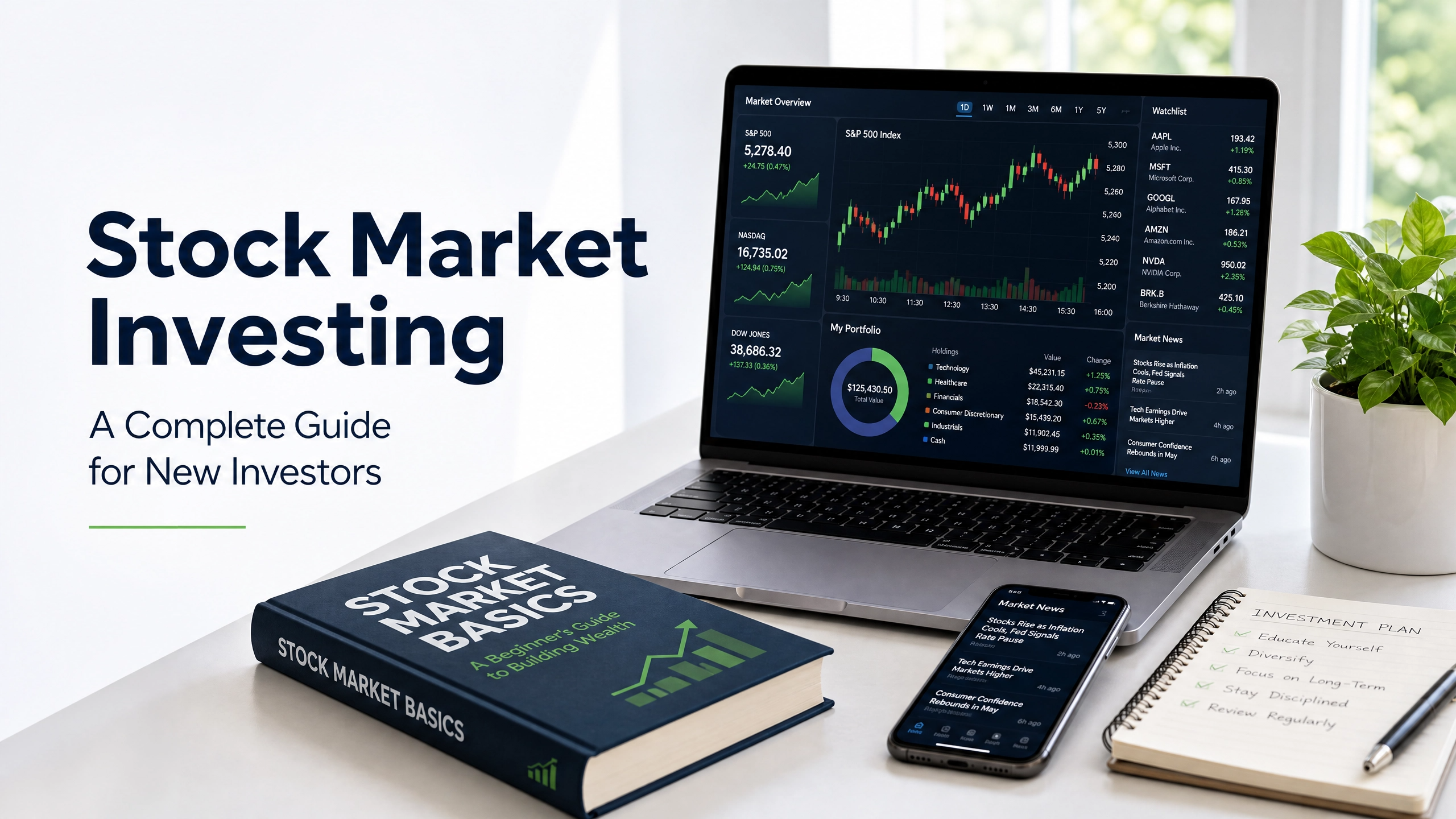

Investing in the stock market is one of the most effective ways to build long-term wealth, achieve financial goals, and create opportunities for future financial security. However, for many beginners, the stock market can seem confusing, risky, and overwhelming.
Terms like stocks, shares, dividends, portfolios, market indexes, and asset allocation may sound complicated at first. The good news is that anyone can learn the basics of stock market investing with the right knowledge, strategy, and mindset.
This complete stock market investing 101 guide will help new investors understand how the stock market works, how to start investing, common investment strategies, potential risks, and practical tips for building a successful investment portfolio.
Whether you are saving for retirement, planning for financial independence, or simply looking for ways to grow your money, understanding stock market investing is an important first step.
What Is Stock Market Investing?
Stock market investing means buying ownership shares of publicly traded companies with the goal of earning returns over time. When you purchase a company’s stock, you become a partial owner of that business.
Companies sell shares of stock to raise money for growth, expansion, research, and operations. Investors buy these shares because they believe the company will become more valuable in the future.
For example, if you buy shares of a technology company and that company increases its profits and expands its business, the value of your shares may rise. You can potentially earn money by selling your shares at a higher price than you paid or by receiving dividend payments.
The stock market provides a marketplace where buyers and sellers trade company shares. Major stock exchanges include the New York Stock Exchange (NYSE) and Nasdaq.
How Does the Stock Market Work?
The stock market operates similarly to other marketplaces where buyers and sellers exchange products. Instead of buying physical goods, investors trade ownership portions of companies.
The Basic Process:
-
Companies issue stocks
Businesses offer shares to the public through an initial public offering (IPO). This allows companies to raise capital.
-
Investors purchase shares
Individuals and institutions buy stocks through brokerage accounts.
-
Stock prices change
Share prices increase or decrease based on supply, demand, company performance, economic conditions, and investor sentiment.
-
Investors earn returns
Investors can make money through:
- Stock price appreciation
- Dividend income
- Reinvested earnings
Stock prices are constantly changing because millions of investors are making decisions based on available information and expectations about future performance.
Why Should Beginners Invest in the Stock Market?
Many people choose stock market investing because it offers several advantages compared with keeping money only in savings accounts.
1. Opportunity for Long-Term Growth
Historically, the stock market has provided strong long-term returns compared with many traditional savings options. While short-term price movements can be unpredictable, patient investors have historically benefited from staying invested over many years.
2. Protect Against Inflation
Inflation reduces the purchasing power of money over time. Investing in assets like stocks can help your money grow faster than inflation.
3. Build Passive Income
Some companies pay dividends to shareholders. Dividend investing can create an additional income stream while allowing investors to maintain ownership of valuable assets.
4. Achieve Financial Goals
Stock market investing can help investors work toward goals such as:
- Retirement planning
- Buying a home
- Funding education
- Building financial independence
- Creating generational wealth
Understanding Different Types of Stocks
Before investing, beginners should understand the major types of stocks available.
Common Stocks
Common stocks represent ownership in a company. Investors typically receive voting rights and may benefit from price growth and dividends.
Most individual investors purchase common stocks.
Preferred Stocks
Preferred stockholders usually receive fixed dividend payments and have priority over common shareholders when receiving company distributions.
However, preferred shareholders often have limited voting rights.
Growth Stocks
Growth stocks belong to companies expected to grow faster than average. These companies often reinvest profits into expansion rather than paying large dividends.
Examples include companies in:
- Technology
- Healthcare
- Renewable energy
- Artificial intelligence
Growth stocks may offer higher returns but often come with greater volatility.
Value Stocks
Value stocks are shares of companies that appear undervalued compared with their actual business potential.
Investors who buy value stocks believe the market has underestimated the company’s future prospects.
Dividend Stocks
Dividend stocks belong to companies that regularly distribute part of their profits to shareholders.
They are popular among investors seeking steady income.
How to Start Investing in Stocks as a Beginner
Starting your investment journey does not require thousands of dollars or advanced financial knowledge. Following a simple process can help beginners build confidence.
Step 1: Set Financial Goals
Before investing, determine why you are investing.
Ask yourself:
- What are my financial goals?
- How long do I plan to invest?
- How much risk can I handle?
- When will I need the money?
Your goals will influence your investment choices.
For example:
- Retirement planning usually requires long-term investments.
- Short-term goals may require safer options.
Step 2: Create an Emergency Fund
Before investing heavily, build an emergency savings fund.
A good emergency fund can cover unexpected expenses such as:
- Medical bills
- Job loss
- Car repairs
- Household emergencies
Having savings prevents you from selling investments during market downturns.
Step 3: Choose an Investment Account
To buy stocks, you need a brokerage account.
Common account options include:
Individual Brokerage Accounts
These accounts allow you to buy and sell investments freely.
Retirement Accounts
Examples include retirement-focused accounts that provide tax advantages.
The best account depends on your financial goals, income, and investment timeline.
Step 4: Learn Before You Invest
Successful investors spend time understanding:
- Companies they invest in
- Market trends
- Financial statements
- Economic conditions
- Investment strategies
Education helps prevent emotional decisions.
Understanding Risk in Stock Market Investing
Every investment carries some level of risk. Stock prices can rise and fall due to many factors.
Common risks include:
Market Risk
The overall stock market can decline due to economic problems, interest rate changes, political events, or investor uncertainty.
Company Risk
Individual companies may perform poorly because of:
- Weak management
- Increased competition
- Falling profits
- Business challenges
Emotional Risk
Many beginners make mistakes by reacting emotionally to market movements.
Common emotional mistakes include:
- Selling during market crashes
- Buying stocks because of hype
- Following short-term trends
Successful investing requires patience and discipline.
The Importance of Diversification
Diversification means spreading investments across different assets to reduce risk.
Instead of investing all your money in one company, diversification allows you to own multiple investments.
For example, a diversified portfolio may include:
- Different companies
- Multiple industries
- Domestic and international investments
- Stocks and other asset classes
If one investment performs poorly, others may help balance your overall returns.
Popular Investment Strategies for Beginners
There is no single perfect investment strategy. Different approaches work for different investors.
1. Buy and Hold Strategy
The buy-and-hold approach involves purchasing quality investments and keeping them for many years.
Benefits include:
- Lower trading costs
- Less emotional decision-making
- Ability to benefit from long-term growth
Many successful investors use this approach.
2. Dollar-Cost Averaging
Dollar-cost averaging means investing a fixed amount of money regularly regardless of market conditions.
For example, investing $200 every month allows you to buy more shares when prices are low and fewer shares when prices are high.
Advantages:
- Reduces timing pressure
- Encourages consistency
- Builds investing discipline
3. Index Fund Investing
Index funds allow investors to own a collection of stocks that track a market index.
Benefits include:
- Low fees
- Broad diversification
- Simple management
Index investing is popular among beginners because it does not require choosing individual stocks.
4. Dividend Investing
Dividend investors focus on companies that regularly share profits with shareholders.
This strategy may appeal to investors seeking:
- Regular income
- Long-term stability
- Wealth-building opportunities
Common Mistakes New Investors Should Avoid
Learning what not to do is just as important as learning what to do.
Investing Without a Plan
Buying stocks randomly without understanding your goals can lead to poor decisions.
Always create an investment strategy before putting money into the market.
Trying to Get Rich Quickly
The stock market is not a guaranteed shortcut to overnight wealth.
Successful investing usually requires:
- Time
- Patience
- Consistency
- Discipline
Ignoring Fees
Investment fees can reduce your returns over time.
Pay attention to:
- Trading costs
- Account fees
- Fund expense ratios
Following Market Hype
Social media trends and popular opinions can influence investors to make rushed decisions.
Always research investments independently.
Checking Investments Too Often
Constantly watching daily price movements can create unnecessary stress and encourage emotional decisions.
Long-term investors focus on progress rather than short-term fluctuations.
How Much Money Do You Need to Start Investing?
One common misconception is that investing requires a large amount of money.
Today, many investors can start with small amounts.
The most important factors are:
- Starting early
- Investing consistently
- Staying disciplined
Even small monthly investments can grow significantly over time because of compound growth.
The Power of Compound Growth
Compound growth occurs when your investment earnings generate additional earnings.
For example:
- You invest money.
- Your investment increases in value.
- Your gains generate future gains.
Over long periods, compounding can significantly increase wealth.
This is why starting early is one of the biggest advantages investors have.
How to Research Stocks Before Buying
Before investing in individual stocks, beginners should evaluate companies carefully.
Important factors include:
Company Revenue
Is the company growing its sales?
Profitability
Does the company generate consistent profits?
Competitive Advantage
Does the company have something that separates it from competitors?
Management Quality
Are company leaders making smart decisions?
Industry Trends
Is the company operating in a growing market?
Understanding these factors helps investors make informed decisions.
Stock Market Investing Tips for Beginners
Follow these practical tips to improve your investing journey:
Start Small
You do not need to invest a large amount immediately.
Think Long Term
Avoid focusing only on daily market movements.
Continue Learning
Financial education improves investment decisions.
Stay Consistent
Regular investing builds wealth over time.
Control Your Emotions
Avoid making decisions based on fear or excitement.
Review Your Portfolio
Check your investments periodically and make adjustments when necessary.
Also Read: How to Choose Legal Services for Startups?
Final Thoughts: Start Your Stock Market Investing Journey
Stock market investing may seem complicated at first, but understanding the basics makes the process much easier. By learning how stocks work, creating a strategy, managing risk, and staying consistent, beginners can build a strong foundation for long-term financial growth.
The most successful investors are not necessarily those who predict every market movement. They are often the ones who stay patient, continue learning, and make thoughtful decisions over time.
Whether you start with a small amount or a larger investment, the important step is beginning your journey and developing responsible investing habits.
The earlier you start learning and investing wisely, the more opportunities you create for your future financial success.