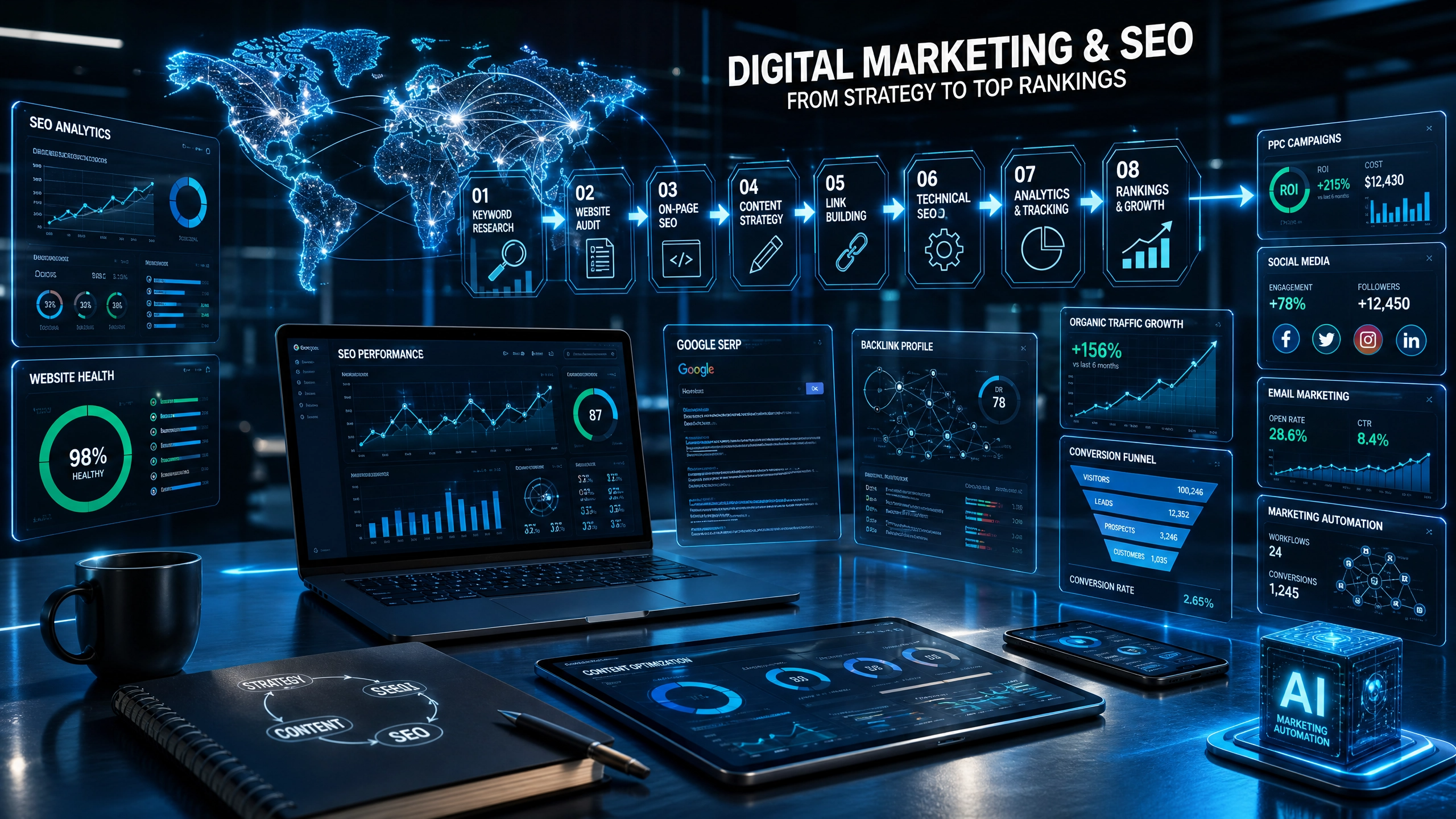

In today’s competitive online world, businesses must do more than simply create a website. They need to attract visitors, build trust, convert prospects into customers, and maintain long-term relationships. This is where Digital Marketing & SEO become essential. Together, these powerful strategies help businesses reach the right audience at the right time through search engines, social media, email campaigns, paid advertising, and valuable content.
Many beginners wonder whether Digital Marketing & SEO are the same thing. While they work closely together, they serve different purposes. Digital marketing is the broader strategy that includes multiple online marketing channels, while SEO specifically focuses on improving visibility in search engine results.
Understanding how these two disciplines work together can help businesses achieve sustainable growth instead of relying solely on expensive advertising.
This comprehensive guide explains every aspect of digital marketing and SEO, how they complement each other, and how you can use them effectively for long-term success.
What Is Digital Marketing?
Digital marketing refers to all online marketing activities used to promote products, services, or brands through digital channels. Instead of relying on traditional advertising like newspapers or television, businesses connect with customers through websites, search engines, social media platforms, email marketing, mobile apps, and online advertising.
The primary goal of digital marketing is to:
- Increase brand awareness
- Generate qualified leads
- Drive website traffic
- Improve customer engagement
- Increase sales
- Build long-term customer relationships
Modern digital marketing relies heavily on data analysis, allowing businesses to measure campaign performance accurately and make improvements continuously.
What Is SEO?
SEO (Search Engine Optimization) is the process of optimizing a website so that search engines like Google can understand, index, and rank its pages for relevant searches.
SEO focuses on making websites:
- Easier to crawl
- Faster to load
- More user-friendly
- More authoritative
- More relevant to user searches
Unlike paid advertising, SEO generates organic traffic, meaning visitors arrive naturally from search engine results without clicking on advertisements.
Understanding How Does Digital Marketing & SEO Work?
Digital marketing & SEO work together as complementary strategies rather than competing methods.
SEO attracts visitors through organic search, while digital marketing nurtures those visitors through multiple channels until they become customers.
The process generally follows these stages:
1. Research Your Audience
Every successful campaign begins by understanding:
- Customer demographics
- Search behavior
- Pain points
- Buying intent
- Preferred communication channels
Knowing your audience allows businesses to create content that solves real problems.
2. Keyword Research
Keyword research identifies the phrases people type into search engines.
Examples include:
- Digital marketing guide
- SEO tips
- Local SEO services
- Best digital marketing strategy
Selecting keywords with high search volume and achievable competition forms the foundation of SEO.
3. Create High-Quality Content
Content is the heart of both digital marketing and SEO.
Examples include:
- Blog articles
- Landing pages
- Product descriptions
- Videos
- Infographics
- Podcasts
- Case studies
Quality content answers user questions while naturally incorporating relevant keywords.
4. Optimize Website Structure
SEO improves technical aspects such as:
- Mobile responsiveness
- Fast loading speed
- HTTPS security
- XML sitemaps
- Internal linking
- Schema markup
- Clean URLs
Search engines reward websites that provide excellent user experiences.
5. Promote Content Across Multiple Channels
Digital marketing distributes optimized content through:
- X (Twitter)
- Email newsletters
- YouTube
- Paid advertising
This increases visibility beyond search engines.
6. Generate Backlinks
When reputable websites link to your content, search engines interpret those links as votes of confidence.
High-quality backlinks improve:
- Domain authority
- Search rankings
- Brand credibility
- Referral traffic
7. Analyze Performance
Successful marketers continuously monitor:
- Organic traffic
- Keyword rankings
- Bounce rate
- Conversion rate
- Click-through rate
- User engagement
- Revenue
Analytics help improve future campaigns.
Why Digital Marketing Needs SEO
Without SEO, even excellent websites may struggle to appear in search results.
SEO supports digital marketing by:
- Increasing free organic traffic
- Building long-term visibility
- Reducing advertising costs
- Improving website credibility
- Enhancing user experience
Organic visitors often convert better because they actively search for solutions.
Why SEO Needs Digital Marketing
SEO alone cannot maximize business growth.
Digital marketing amplifies SEO by:
- Promoting new content
- Increasing brand awareness
- Driving referral traffic
- Encouraging backlinks
- Building customer loyalty
Together they create sustainable business growth.
Major Components of Digital Marketing
Search Engine Optimization
SEO increases organic visibility through keyword optimization, technical improvements, and content creation.
Content Marketing
Publishing valuable content attracts visitors while establishing industry expertise.
Examples include:
- Tutorials
- Buying guides
- Industry news
- FAQs
- Expert interviews
Businesses engage audiences through platforms such as:
- TikTok
Social media increases brand exposure and website traffic.
Email Marketing
Email campaigns nurture leads by sending:
- Newsletters
- Promotions
- Product updates
- Educational content
Email remains one of the highest ROI marketing channels.
Pay-Per-Click Advertising
Paid search ads appear immediately in search engine results.
Benefits include:
- Fast traffic
- Targeted audiences
- Budget control
- Measurable ROI
Affiliate Marketing
Businesses partner with publishers who promote products in exchange for commissions.
Influencer Marketing
Influencers introduce brands to engaged audiences, increasing trust and conversions.
Key SEO Elements
On-Page SEO
Includes optimizing:
- Title tags
- Headings
- URLs
- Images
- Meta descriptions
- Internal links
- Content quality
Technical SEO
Focuses on:
- Crawlability
- Site speed
- Mobile optimization
- Structured data
- Secure HTTPS
- XML sitemaps
Off-Page SEO
Includes:
- Link building
- Brand mentions
- Digital PR
- Social signals
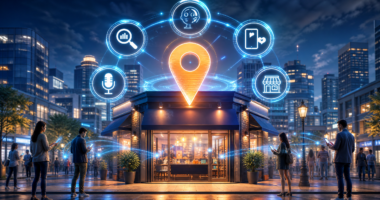
Local SEO
Businesses serving local customers optimize:
- Google Business Profile
- Local citations
- Reviews
- Maps listings
Benefits of Combining Digital Marketing and SEO
Businesses experience significant advantages by integrating both strategies.
Higher Organic Traffic
SEO attracts users actively searching for products and services.
Better Brand Recognition
Consistent visibility builds familiarity and trust.
Increased Leads
Qualified visitors are more likely to become customers.
Higher Conversion Rates
Optimized landing pages improve conversions.
Long-Term Growth
Unlike paid advertising, SEO continues delivering traffic long after content is published.
Better Return on Investment
Organic traffic reduces dependence on expensive advertising.
Common SEO Ranking Factors
Search engines evaluate hundreds of signals, including:
- Content quality
- Keyword relevance
- User experience
- Mobile friendliness
- Website speed
- Backlinks
- Domain authority
- HTTPS security
- Structured data
- Internal linking
Common Digital Marketing Channels
Businesses commonly use:
- Search engines
- Social media
- Video marketing
- Display advertising
- Mobile marketing
- Content marketing
- Affiliate marketing
- Influencer campaigns
Using multiple channels improves overall marketing effectiveness.
Content Marketing and SEO Relationship
Content gives search engines pages to rank.
SEO ensures people can find that content.
Together they:
- Answer user questions
- Increase rankings
- Earn backlinks
- Build authority
- Generate consistent traffic
Mobile Optimization Matters
Over half of internet users browse on mobile devices.
Google prioritizes mobile-friendly websites.
Businesses should ensure:
- Responsive design
- Fast loading
- Easy navigation
- Readable text
- Clickable buttons
Importance of Website Speed
Slow websites lose visitors quickly.
Improving speed includes:
- Compressing images
- Browser caching
- Fast hosting
- Optimized code
- Content Delivery Networks
Fast websites improve both SEO and user satisfaction.
Measuring Success
Businesses should monitor:
- Organic traffic
- Sessions
- Bounce rate
- Conversion rate
- Average engagement time
- Keyword rankings
- Revenue
- Customer acquisition cost
- Return on investment
Continuous monitoring helps refine marketing strategies.
Common Mistakes to Avoid
Many businesses struggle because they:
- Ignore keyword research
- Publish low-quality content
- Stuff keywords unnaturally
- Skip technical SEO
- Forget mobile optimization
- Neglect analytics
- Ignore user experience
- Build poor-quality backlinks
Avoiding these mistakes improves long-term success.
Future Trends
Digital marketing continues evolving rapidly.
Emerging trends include:
- Artificial Intelligence
- Voice Search
- Visual Search
- Predictive Analytics
- Personalized Marketing
- Video Content
- Interactive Content
- Automation
- Zero-Click Searches
Businesses adapting early often gain competitive advantages.
Best Practices
For sustainable success:
- Publish valuable content consistently
- Perform regular keyword research
- Optimize website speed
- Build authoritative backlinks
- Improve user experience
- Update older content
- Monitor analytics
- Focus on customer intent
- Maintain technical SEO
- Stay updated with search engine changes
Frequently Asked Questions
Is SEO part of digital marketing?
Yes. SEO is one of the most important components of digital marketing because it focuses on increasing organic visibility in search engines.
How long does SEO take to show results?
Most websites begin seeing measurable improvements within three to six months, although competitive industries may require more time.
Is paid advertising better than SEO?
Paid advertising produces immediate traffic, while SEO provides sustainable long-term organic traffic. Combining both usually delivers the best results.
Can small businesses benefit from digital marketing?
Absolutely. Digital marketing allows small businesses to compete with larger companies by targeting specific audiences efficiently.
Why is content important for SEO?
Quality content answers user questions, satisfies search intent, earns backlinks, and improves search rankings over time.
Also read: What Makes Digital Marketing & SEO Powerful?
The Bottom Line
Understanding Digital Marketing & SEO is essential for anyone who wants to succeed online. While digital marketing encompasses a wide range of strategies—from content creation and social media to email campaigns and paid advertising—SEO provides the foundation for attracting consistent organic traffic through search engines. When these approaches are integrated, businesses can increase visibility, build trust, generate qualified leads, and achieve sustainable growth.
Investing in high-quality content, technical optimization, keyword research, user experience, and performance analysis creates a strong digital presence that delivers long-term results. Rather than treating SEO and digital marketing as separate efforts, organizations should view them as complementary strategies that work together to maximize online success.