2026 Local Digital Marketing has undergone a seismic shift, fundamentally altering how brick-and-mortar stores, regional franchises, and independent service providers attract nearby consumers. As search engine algorithms become hyper-personalized, zero-click searches dominate query volume, and artificial intelligence mediates local consumer interactions, relying on legacy promotional tactics is no longer viable. Today’s hyper-connected consumers expect instant, precise, and highly localized digital interactions before setting foot in a physical location or scheduling an on-site service appointment. Small-to-medium businesses (SMBs) must navigate a landscape where regional search intent, real-time store availability, visual-spatial discovery, and personalized outreach intersect seamlessly across multi-channel buyer journeys.
To establish market dominance in your immediate trade area, deploying a modern blueprint is required. Below is a comprehensive analysis of the core pillars driving sustainable growth, customer acquisition, and brand equity in today’s dynamic marketplace.
1. Hyper-Local SEO & Spatial Search Optimization for 2026 Local Digital Marketing
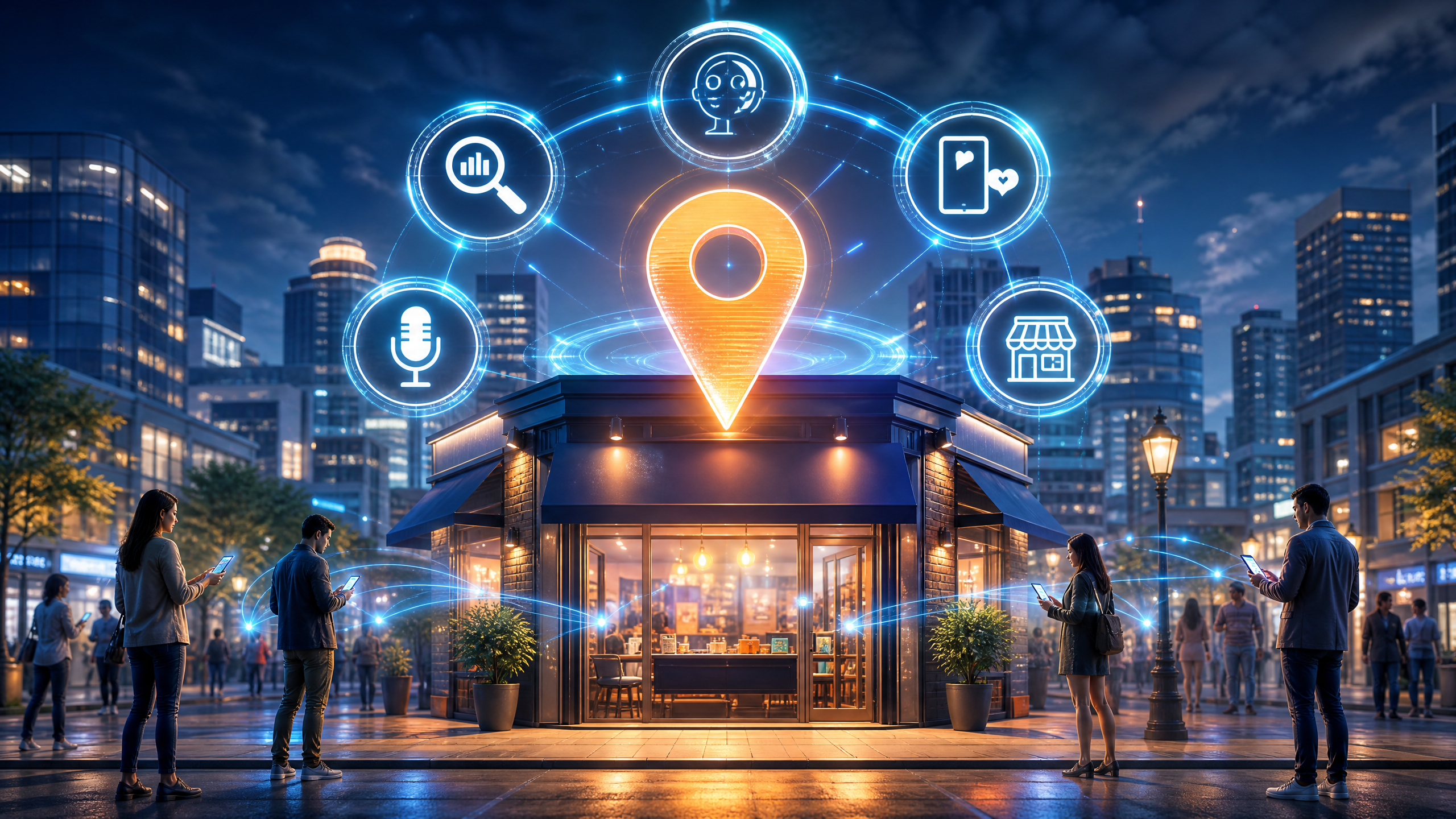
Local visibility is no longer just about ranking for broad city-level terms like “plumber in Chicago” or “coffee shop near me.” Modern spatial computing, conversational search engines, and real-time geo-tracking demand precise spatial search optimization. Winning in search requires establishing neighborhood-level micro-relevance across every digital touchpoint.
Mapping Spatial Relevance in 2026 Local Digital Marketing
Search engines now utilize micro-proximity vectors to evaluate business listings. When a prospective customer searches for immediate solutions, algorithms measure physical distance down to feet and blocks rather than general municipal boundaries. To capture this hyper-targeted traffic, businesses must structure their website architecture using nested schema markup that specifies localized service coverage areas, sub-districts, and landmark proximity points.
Maintaining strict Name, Address, and Phone Number (NAP) consistency across every online directory, social listing, and industry platform remains foundational. However, NAP metadata must be augmented with rich contextual attributes, including high-definition interior photos, real-time parking availability, accessible entry points, and verified inventory listings integrated directly into your business profile.
Voice, Conversational, and Generative Search Alignment
Over 60% of local search queries are now executed via conversational AI interfaces, smart auto dashboards, and wearable voice assistants. Consumers rarely speak in truncated keywords; instead, they express immediate, complex intent—for example, “Where can I find an organic vegan bakery open right now near Central Park with outdoor seating?”
Optimizing for these long-tail, conversational queries requires incorporating natural language FAQ sections across your location pages. Structure content around localized solution-focused questions, embedding structured JSON-LD schemas so search bots can instantly parse and serve your operational data as direct answers.
2. AI-Driven Personalization & Predictive Engagement in 2026 Local Digital Marketing
Artificial Intelligence has transitioned from a specialized enterprise advantage into an accessible requirement for small business growth. Integrating predictive analytics and automated customer engagement enables local brands to deliver personalized experiences at scale without expanding overhead costs.
Predictive Customer Behavior and Smart Automation
Leveraging AI-driven marketing automation platforms allows local business owners to anticipate customer needs based on historical purchase cadence, seasonal trends, and localized weather shifts. For instance, an HVAC provider utilizing predictive analytics can deploy targeted maintenance reminders to homeowners right before peak summer heatwaves or freezing winter fronts, driving bookings before competitors even begin advertising.
Furthermore, machine learning algorithms analyze local web traffic to automatically adjust website headers, promotional banners, and call-to-action buttons based on the visitor’s detected neighborhood, device type, and past interaction history.
Hyper-Personalized Email and SMS Nurturing
Generic mass newsletter blasts are largely ineffective. Today’s high-converting campaigns rely on micro-segmentation. By categorizing your customer database according to specific buying behaviors, preferred service lines, and precise geographic zip codes, local businesses can send highly targeted, tailored offers.
-
VIP Loyalty Rewards: Automatically trigger personalized incentives for high-value local regulars after specific visit thresholds.
-
Behavioral Re-engagement: Deploy automated SMS check-ins when a local client passes a typical service renewal timeframe.
-
Event-Driven Offers: Broadcast limited-time offers synchronized with nearby community events, games, or festivals.
3. Frictionless Mobile-First Experiences & Instant Conversion Paths in 2026 Local Digital Marketing
Mobile browsing accounts for over 75% of local discovery interactions. If your digital touchpoints present friction, slow loading times, or complex multi-step navigation, prospective clients will immediately return to search results and choose a local competitor.
Core Web Vitals & Accelerated Mobile Performance
Google’s mobile-first indexing strictly penalizes websites with slow rendering, layout shifts, or delayed input responsiveness. Ensuring your site meets high-performance benchmarks requires light code architecture, optimized visual assets, and edge server caching tailored for mobile networks.
| Benchmark Metric | Local Performance Target | Operational Business Impact |
| Mobile Page Load | Under 1.5 Seconds | Reduces bounce rate by over 35% |
| First Input Delay (FID) | Under 100ms | Ensures immediate user interactivity |
| Cumulative Layout Shift (CLS) | Less than 0.1 | Prevents accidental tap misclicks |
Direct Conversion Mechanics and Mobile Usability
Designing for mobile users means minimizing the steps required to complete a transaction or consultation request. Essential elements include:
-
Click-to-Call & Click-to-Map Navigation: Prominently position persistent contact bars at the bottom of mobile screens so users can initiate calls or map directions with a single tap.
-
Native Booking & Instant Messaging Integration: Embed direct scheduling widgets (e.g., Google Reserve) and digital wallet passes so consumers can finalize appointments instantly without filling out lengthy form fields.
-
Simplified Micro-Forms: Limit mobile lead capture forms to two or three inputs (e.g., Name, Phone, Desired Service) to eliminate typing friction on small screens.
4. Precision Geo-Targeted PPC & Social Advertising in 2026 Local Digital Marketing
Pay-Per-Click (PPC) and targeted paid social channels provide instantaneous local market reach. However, without precise geographic parameters and audience filtering, ad spend can quickly yield low return on investment. Modern paid channels require strategic precision.
Radius Fencing and Geo-Conquesting Strategies
Advanced advertising platforms allow businesses to draw exact radial boundaries or custom polygon shapes around target service zones, high-income residential tracts, or commercial hubs. Geo-conquesting tactics enable brands to display strategic promotional ads to consumers while they are physically located near competing establishments, capturing active intent at critical decision points.
Local Services Ads (LSA) and Visual Social Media
Google Local Services Ads remain a critical channel for local service businesses (e.g., plumbers, electricians, legal professionals). Earning the “Google Guaranteed” or “Google Screened” badge builds immediate trust, while charging advertisers only for valid, direct phone inquiries or appointment leads rather than unvetted ad clicks.
Concurrently, platforms like Instagram, TikTok, and YouTube Shorts drive local discovery through visual story-telling. Short-form video content showing behind-the-scenes craft, local client transformations, community involvement, and local team spotlights builds brand affinity far faster than static image ads.
5. Local Authority Building, Reviews & Community Proof in 2026 Local Digital Marketing
Trust is the primary currency of local commerce. Modern algorithms heavily weight authentic social proof, review velocity, and regional backlinks when deciding which businesses earn top positioning in local search clusters.
Systematized Review Generation and Sentiment Management
Relying on passive review collection is insufficient. High-ranking local businesses implement automated post-service review request workflows via automated SMS and email sequences. Key elements of effective review management include:
-
Velocity and Consistency: Acquiring steady weekly reviews signals active operational health far better than sporadic review dumps.
-
Keyword-Rich Feedback: Prompting happy clients to mention specific services and neighborhood names in their reviews naturally reinforces hyper-local SEO relevance.
-
Proactive Review Response: Publicly responding to 100% of reviews—both positive and negative—demonstrates accountability and provides additional text context for search algorithms.
Earning High-Impact Regional Backlinks
Off-page authority in local marketing differs significantly from traditional global SEO. Instead of chasing high-Domain Authority national publications, prioritize local relevance. Quality regional backlink sources include:
-
Sponsoring regional youth sports teams, local charity runs, and non-profit community events.
-
Partnering with non-competing complementary local businesses for cross-promotional guides and blog features.
-
Joining local Chambers of Commerce, business improvement districts, and regional trade associations.
Execution Roadmap: Implementing 2026 Local Digital Marketing Tactics
Achieving sustainable market leadership requires systematically executing these five core pillars. To maximize your return on effort, follow this tactical 90-day execution framework:
Also Read: What Makes Smart Investing Successful?
-
Days 1–30: Technical Foundation & Hyper-Local Audit
Audit your digital footprint for strict NAP consistency across all major aggregators. Update your Google Business Profile with fresh visuals, clear service lists, and optimized operational attributes. Audit your mobile website speed to ensure Core Web Vitals pass all performance metrics.
-
Days 31–60: Automation, AI & Local Authority
Deploy automated post-interaction review request workflows across SMS and email. Segment your customer contact list by zip code and purchase history to launch personalized nurturing campaigns. Secure local sponsorship placements to build valuable regional backlinks.
-
Days 61–90: Precision Advertising & Scaled Optimization
Launch geo-fenced PPC and Google Local Services Ads campaigns focused on your primary trade areas. Integrate conversational FAQ content on key location landing pages to capture long-tail voice and AI search queries. Continuously review conversion analytics to refine your lead paths.
In summary, mastering 2026 Local Digital Marketing empowers businesses to build deep community connections, outpace larger national competitors, and maintain a consistent pipeline of loyal local clients.