
In the constantly changing world of digital marketing, search engine optimization (SEO) remains one of the most powerful ways to attract targeted visitors to your website. However, SEO is no longer just about adding keywords and building backlinks. Search engines are becoming smarter, user expectations are increasing, and businesses must adapt to new strategies to stay competitive.
In 2026, successful SEO requires a combination of high-quality content, technical optimization, user experience improvements, artificial intelligence, and a deep understanding of search intent.
Whether you run a blog, online store, business website, or content platform, applying the right SEO strategies can help you improve rankings, increase organic traffic, and reach more potential customers.
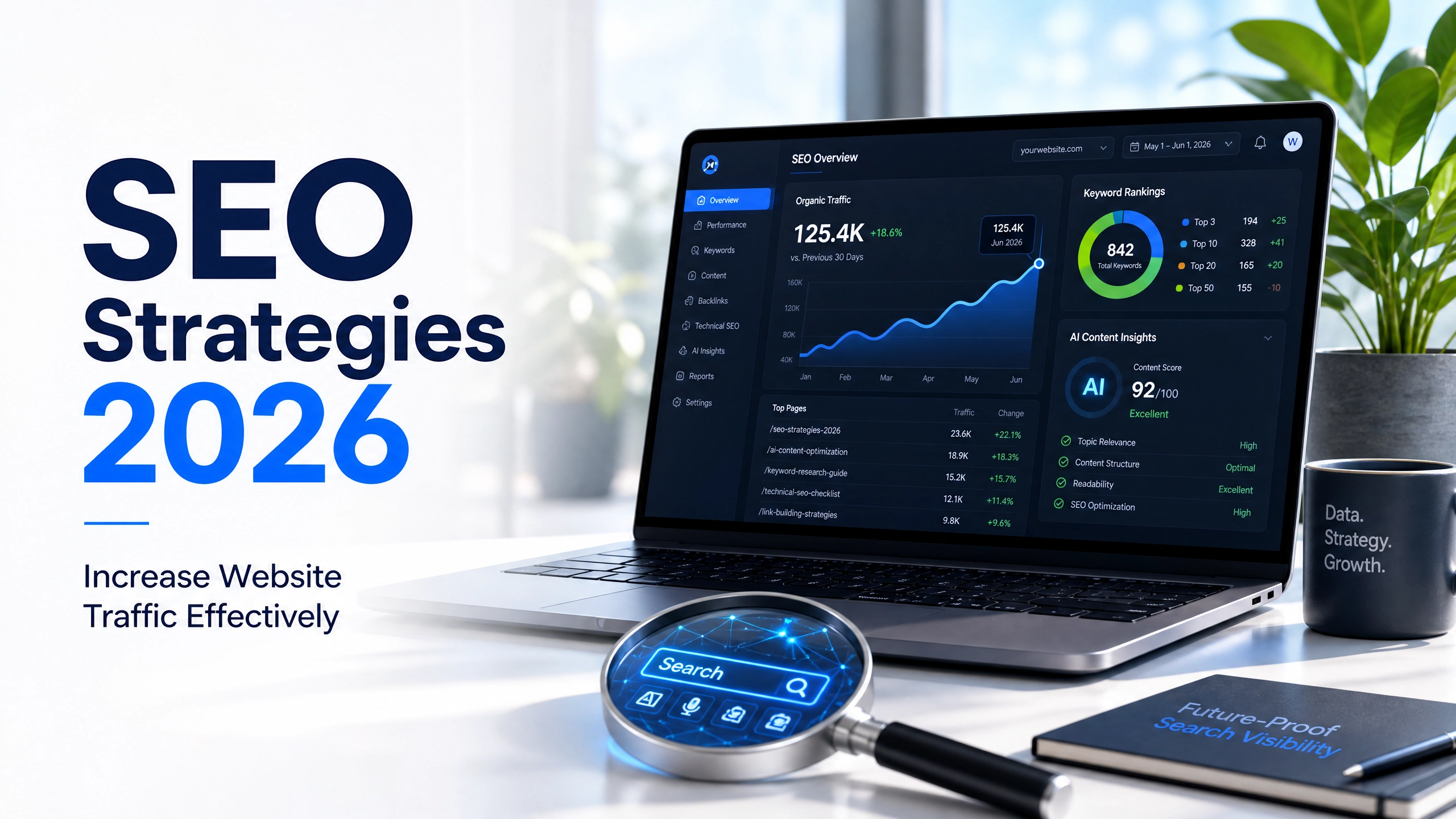
This complete guide covers the best SEO strategies to increase website traffic in 2026, including content optimization, keyword research, technical SEO, AI-driven strategies, link building, and user-focused improvements.
Why SEO Is Still Important in 2026
Search engines remain one of the primary ways people discover information, products, and services online.
Every day, millions of users search for answers, solutions, and recommendations. Websites that appear higher in search results receive more visibility and opportunities.
A strong SEO strategy helps businesses:
- Increase organic website traffic
- Improve brand visibility
- Generate qualified leads
- Reduce dependence on paid advertising
- Build long-term online authority
Unlike paid ads, where traffic stops when the budget ends, SEO can continue generating visitors over time when done correctly.
1. Focus on Search Intent Instead of Just Keywords
One of the biggest SEO changes in recent years is the shift from keyword matching to understanding user intent.
Search engines now focus on delivering results that best answer the user’s needs.
Instead of only asking:
“Which keyword should I use?”
Successful SEO professionals ask:
“What does the user actually want to find?”
Types of Search Intent
Informational Intent
Users want to learn something.
Examples:
- How does SEO work?
- Best marketing strategies
- Ways to improve website traffic
Commercial Intent
Users are researching before making a decision.
Examples:
- Best SEO tools
- Website hosting comparison
- Top marketing agencies
Transactional Intent
Users are ready to take action.
Examples:
- Buy SEO software
- Hire an SEO expert
- Purchase a product
Users are searching for a specific website or brand.
Optimizing content around search intent helps attract visitors who are more likely to engage with your website.
2. Create High-Quality, Helpful Content
Content remains one of the strongest ranking factors in SEO.
However, in 2026, simply publishing large amounts of content is not enough.
Search engines increasingly reward content that demonstrates:
- Expertise
- Experience
- Authority
- Trustworthiness
This approach is often called E-E-A-T.
Characteristics of High-Quality SEO Content:
Provides Real Value
Your content should solve problems, answer questions, and provide useful information.
Includes Original Insights
Add:
- Examples
- Case studies
- Expert opinions
- Personal experiences
- Data analysis
Matches User Needs
Avoid writing content only for search engines. Write for real people first.
Maintains Accuracy
Update outdated information regularly to keep content reliable.
3. Perform Advanced Keyword Research
Keyword research remains essential, but modern SEO requires a smarter approach.
Instead of focusing only on high-volume keywords, consider:
- Search intent
- Competition level
- User questions
- Long-tail keywords
- Topic relationships
Effective Keyword Research Strategies:
Target Long-Tail Keywords
Long-tail keywords usually contain more specific phrases.
Example:
Broad keyword:
“SEO tools”
Long-tail keyword:
“Best SEO tools for small businesses in 2026”
Long-tail keywords often have lower competition and attract highly targeted visitors.
Build Topic Clusters
Instead of creating random articles, organize content around major topics.
Example:
Main topic:
SEO Strategies
Supporting articles:
- Keyword research guide
- Technical SEO checklist
- Link building strategies
- Local SEO tips
This helps search engines understand your expertise.
4. Optimize Content for AI Search and Semantic SEO
Search is becoming more conversational, especially with AI-powered search experiences.
Websites need to optimize content for meaning, not just keywords.
Semantic SEO Includes:
- Related topics
- Synonyms
- Frequently asked questions
- Entity relationships
- Contextual information
For example, an article about “SEO strategies” should naturally include related concepts such as:
- Search rankings
- Organic traffic
- Website optimization
- Content marketing
- Technical SEO
This creates a more complete resource.
5. Improve Website Speed and Core Web Performance
Technical SEO plays a major role in website rankings.
Users expect websites to load quickly, especially on mobile devices.
Slow websites can lead to:
- Higher bounce rates
- Lower engagement
- Poor rankings
Improve Website Speed By:
- Compressing images
- Using efficient hosting
- Reducing unnecessary scripts
- Improving mobile performance
- Using browser caching
A fast website creates a better user experience and supports SEO performance.
6. Prioritize Mobile SEO
Mobile optimization is no longer optional.
Most online searches happen through mobile devices, making mobile performance essential.
Mobile SEO Best Practices:
- Use responsive design
- Improve loading speed
- Create easy navigation
- Use readable fonts
- Avoid intrusive pop-ups
A website that works smoothly on smartphones has a stronger chance of ranking well.
7. Optimize Existing Content
Many websites focus only on creating new content while ignoring existing pages.
Updating old content can be one of the fastest ways to increase traffic.
Content Refresh Strategies:
Update:
- Statistics
- Examples
- Images
- Links
- Outdated information
Improve:
- Headlines
- Keyword targeting
- Readability
- Structure
Refreshing existing content helps maintain rankings and regain lost traffic.
8. Create SEO-Friendly Content Structure
Content formatting affects both user experience and rankings.
A well-structured article is easier for users and search engines to understand.
SEO Content Structure:
Use:
- Clear headings (H2 and H3)
- Short paragraphs
- Bullet points
- Lists
- Images
- FAQs
A strong structure improves readability and encourages visitors to spend more time on your website.
9. Build High-Quality Backlinks
Backlinks remain an important ranking factor.
A backlink is a link from another website pointing to your site.
However, quality matters more than quantity.
One backlink from a trusted, authoritative website can be more valuable than many low-quality links.
Effective Link Building Strategies:
Create Link-Worthy Content
Examples:
- Research reports
- Statistics articles
- Detailed guides
- Original studies
Guest Posting
Write valuable content for relevant websites.
Digital PR
Promote unique content through online publications.
Build Relationships
Networking with industry websites can create natural link opportunities.
10. Optimize for Featured Snippets
Featured snippets provide quick answers at the top of search results.
Optimizing for snippets can increase visibility and clicks.
Ways to Improve Featured Snippet Chances:
Answer questions clearly.
Use:
- Definitions
- Numbered lists
- Tables
- Step-by-step explanations
Example:
Question:
“What is SEO?”
Optimized answer:
“SEO is the process of improving a website’s visibility in search engines to attract more organic traffic.”
11. Use Video SEO Strategies
Video content continues growing as an important search channel.
Optimizing videos can help increase visibility across search platforms.
Video SEO Tips:
- Use keyword-focused titles
- Write detailed descriptions
- Add transcripts
- Create engaging thumbnails
- Answer common questions
Embedding relevant videos into articles can also improve user engagement.
12. Strengthen Internal Linking
Internal links connect different pages within your website.
They help:
- Users discover more content
- Search engines understand website structure
- Spread ranking authority
Internal Linking Best Practices:
Link related articles naturally.
Example:
An article about SEO strategies can link to:
- Keyword research guide
- Technical SEO checklist
- Content marketing tips
Avoid excessive or unnatural linking.
13. Improve User Experience (UX)
SEO and user experience are closely connected.
Search engines analyze signals that indicate whether users find websites helpful.
Important UX factors include:
- Easy navigation
- Clear design
- Fast loading speed
- Mobile usability
- Helpful content
A website that provides a positive experience is more likely to earn better rankings.
14. Optimize for Local SEO
For businesses serving specific locations, local SEO is essential.
Local SEO helps businesses appear in searches like:
- “SEO agency near me”
- “Best restaurant in my city”
- “Local marketing services”
Local SEO Strategies:
- Optimize Google Business Profile
- Collect customer reviews
- Use local keywords
- Create location-based content
- Maintain consistent business information
Local search visibility can drive highly targeted customers.
15. Use AI Tools Wisely for SEO
Artificial intelligence is transforming SEO workflows.
AI tools can help with:
- Content research
- Keyword analysis
- Content optimization
- Competitor research
- Idea generation
However, AI-generated content should always be reviewed and improved by humans.
The best results come from combining AI efficiency with human expertise and creativity.
16. Monitor SEO Performance Regularly
SEO requires continuous improvement.
Track important metrics such as:
- Organic traffic
- Keyword rankings
- Click-through rates
- Conversion rates
- Bounce rates
- Page performance
Use analytics data to identify:
- What is working
- What needs improvement
- Which pages need updates
Common SEO Mistakes to Avoid in 2026
Keyword Stuffing
Using keywords unnaturally can hurt rankings.
Focus on creating helpful content.
Ignoring Technical SEO
Great content cannot perform well if your website has technical problems.
Publishing Low-Quality Content
More content does not always mean better results.
Quality matters.
Buying Poor-Quality Backlinks
Spam links can damage your website reputation.
Ignoring User Experience
Visitors should always come first.
Future SEO Trends to Watch in 2026
SEO will continue evolving.
Important trends include:
AI-Powered Search
Search engines are becoming more intelligent and conversational.
Voice Search Optimization
More users are searching through voice assistants.
Personalized Search Results
Search experiences will become increasingly customized.
User Experience Signals
Website usability will continue influencing rankings.
First-Hand Experience Content
Original insights and real-world examples will become more valuable.
SEO Strategy Checklist for 2026
Use this checklist to improve your website:
✓ Research search intent
✓ Target relevant keywords
✓ Create valuable content
✓ Optimize technical performance
✓ Improve mobile experience
✓ Build quality backlinks
✓ Update old content
✓ Strengthen internal links
✓ Optimize images and videos
✓ Monitor SEO results regularly
Final Thoughts: Building Long-Term Website Traffic With SEO
The best SEO strategies to increase website traffic in 2026 focus on creating value for users while helping search engines understand your content.
SEO success is no longer about shortcuts or quick tricks. It requires a complete approach that combines high-quality content, technical optimization, user experience, and continuous improvement.
Also Read: Personal Finance Future: Improve Your Financial Life
By focusing on search intent, producing helpful content, improving website performance, and building authority, businesses and creators can achieve sustainable organic traffic growth.
The websites that succeed in 2026 will be those that prioritize users, adapt to changing search technology, and consistently deliver valuable experiences.