
In today’s competitive digital world, businesses need more than traditional advertising methods to attract customers and increase sales. Consumers are spending more time online, researching products, comparing brands, and making purchasing decisions through digital channels.
This shift has made digital marketing strategies essential for businesses of all sizes. Whether you run a small startup, an online store, or an established company, the right digital marketing approach can help you reach your target audience, build brand awareness, and generate consistent growth.
Digital marketing is not just about running advertisements. It involves creating valuable content, improving online visibility, engaging customers, building relationships, and using data to make smarter decisions.
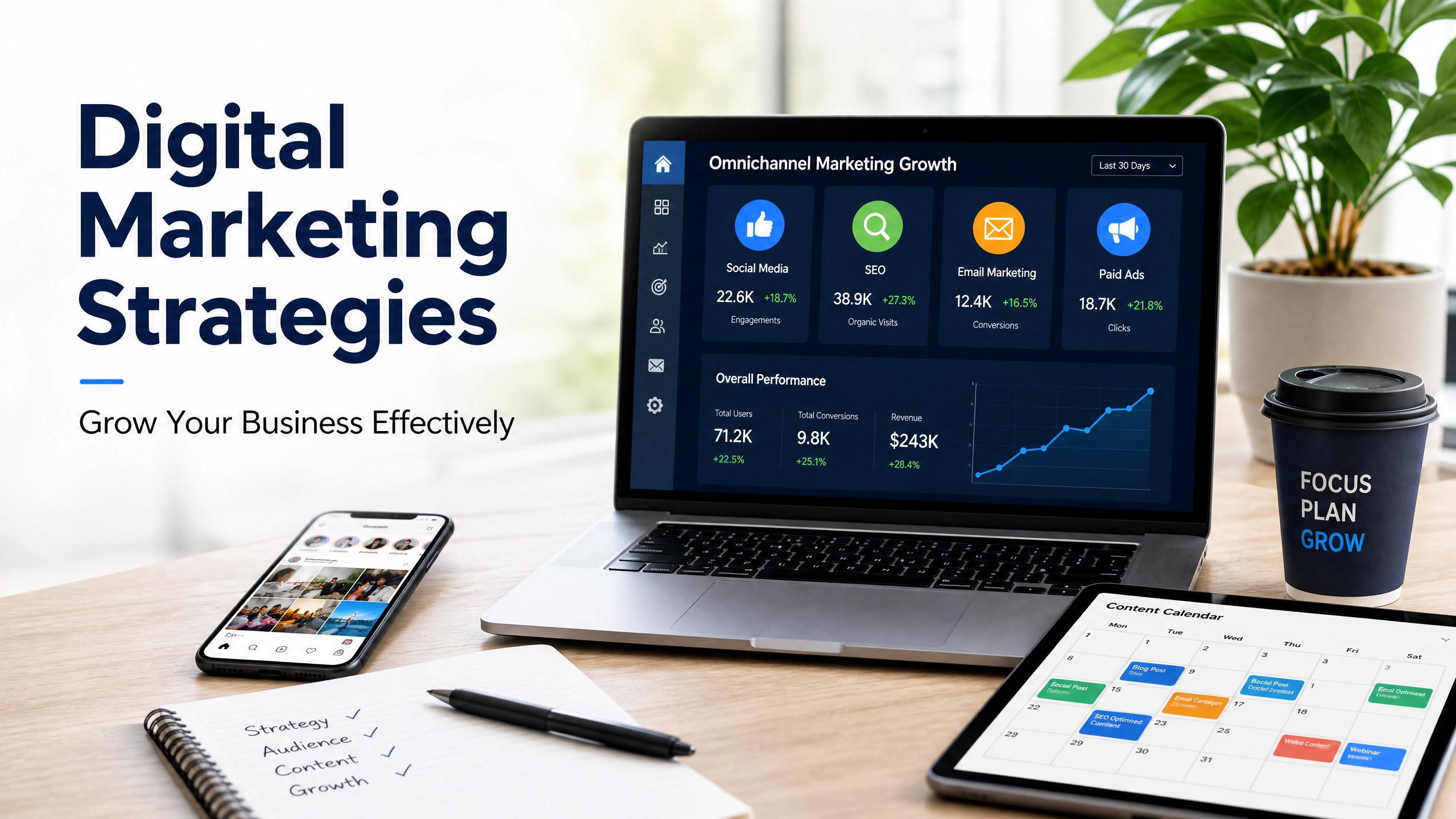
This complete guide explores the top digital marketing strategies to grow your business, including SEO, content marketing, social media, email marketing, paid advertising, influencer marketing, and more.
What Is Digital Marketing?
Digital marketing refers to promoting products, services, or brands through online channels and digital technologies.
Unlike traditional marketing, digital marketing allows businesses to target specific audiences, measure results, and optimize campaigns based on real-time data.
Common digital marketing channels include:
- Search engines
- Social media platforms
- Websites
- Email marketing
- Online advertising
- Video platforms
- Mobile applications
The goal of digital marketing is to connect with potential customers at the right time and through the right channels.
Why Digital Marketing Is Important for Business Growth
Businesses today cannot rely only on offline marketing methods. Digital strategies provide several advantages.
1. Reach a Larger Audience
The internet allows businesses to connect with customers worldwide.
A strong online presence helps companies reach people who may never discover them through traditional advertising.
2. Cost-Effective Marketing
Digital marketing often provides more affordable options compared with traditional advertising.
Businesses can choose budgets, target specific audiences, and measure results.
3. Better Customer Targeting
Digital platforms allow businesses to target customers based on:
- Interests
- Location
- Age
- Online behavior
- Search activity
This helps businesses reach more relevant audiences.
4. Measurable Results
Digital marketing provides detailed performance data.
Businesses can track:
- Website visitors
- Sales conversions
- Customer engagement
- Advertising performance
This makes it easier to improve marketing strategies.
1. Search Engine Optimization (SEO)
SEO is one of the most effective long-term digital marketing strategies.
Search engine optimization improves your website’s visibility in search results, helping potential customers find your business naturally.
When people search for products, services, or solutions related to your business, appearing higher in search results increases your chances of attracting visitors.
Key SEO Strategies:
Keyword Research
Identify keywords your target customers are searching for.
Examples:
- Product-related searches
- Service questions
- Industry topics
- Problem-solving queries
On-Page SEO
Optimize website elements such as:
- Page titles
- Headings
- Meta descriptions
- Content structure
- Internal links
Technical SEO
Improve:
- Website speed
- Mobile performance
- Security
- Site structure
Link Building
Earn quality backlinks from trusted websites to improve authority.
SEO requires patience, but it can create sustainable traffic and long-term business growth.
2. Content Marketing
Content marketing focuses on creating valuable information that attracts and engages your target audience.
Instead of directly promoting products, businesses provide helpful content that builds trust.
Examples of content marketing include:
- Blog posts
- Guides
- Videos
- Podcasts
- Case studies
- Infographics
- Tutorials
Benefits of Content Marketing:
- Builds brand authority
- Improves SEO rankings
- Educates customers
- Generates leads
- Creates long-term traffic
A successful content strategy focuses on answering customer questions and solving real problems.
Social media platforms provide powerful opportunities for businesses to connect with customers.
A strong social media strategy helps brands:
- Increase awareness
- Build communities
- Share content
- Communicate with customers
- Drive website traffic
Popular social media marketing activities include:
- Posting educational content
- Sharing customer stories
- Creating videos
- Running contests
- Responding to comments
Choose the Right Platforms
Not every platform works for every business.
Focus on platforms where your customers spend time.
Post Consistently
Regular posting helps maintain visibility.
Encourage Engagement
Ask questions, respond to comments, and create conversations.
Use Visual Content
Images and videos often generate stronger engagement.
4. Email Marketing
Email marketing remains one of the most effective digital marketing channels for customer retention.
Unlike social media platforms, email allows businesses to communicate directly with their audience.
Email marketing can be used for:
- Promotions
- Newsletters
- Product updates
- Educational content
- Customer follow-ups
Email Marketing Best Practices:
Build an Email List
Offer valuable resources such as:
- Free guides
- Discounts
- Checklists
- Exclusive content
Personalize Messages
Use customer data to send relevant content.
Create Strong Subject Lines
A good subject line increases open rates.
Provide Value
Avoid sending only promotional messages.
The goal is to build relationships, not just make sales.
5. Pay-Per-Click Advertising (PPC)
PPC advertising allows businesses to pay for targeted traffic from search engines and social media platforms.
Examples include:
- Search ads
- Display ads
- Social media ads
- Shopping ads
The biggest advantage of PPC is speed. Unlike SEO, which takes time, paid advertising can generate traffic immediately.
Benefits of PPC Marketing:
- Fast results
- Precise targeting
- Budget control
- Measurable performance
Tips for Successful PPC Campaigns:
- Research keywords carefully
- Create compelling ad copy
- Test different versions
- Track conversions
- Optimize campaigns regularly
6. Video Marketing
Video has become one of the most powerful forms of online content.
Consumers often prefer watching videos because they are engaging, easy to understand, and memorable.
Businesses can use video marketing for:
- Product demonstrations
- Tutorials
- Customer testimonials
- Behind-the-scenes content
- Educational videos
Benefits of Video Marketing:
- Increases engagement
- Builds trust
- Improves brand awareness
- Supports SEO
- Encourages sharing
Short-form videos have become especially effective for reaching new audiences.
7. Influencer Marketing
Influencer marketing involves partnering with individuals who have an engaged audience.
Influencers can help businesses:
- Build credibility
- Reach new customers
- Increase product awareness
Successful influencer marketing depends on choosing influencers who match your brand values and target audience.
Tips for Influencer Marketing:
- Focus on relevance over follower count
- Choose trusted creators
- Set clear campaign goals
- Measure results
Micro-influencers can often provide strong engagement because they have closer relationships with their audiences.
8. Conversion Rate Optimization (CRO)
Driving traffic is important, but converting visitors into customers is the ultimate goal.
Conversion rate optimization focuses on improving website performance to increase actions such as:
- Purchases
- Sign-ups
- Downloads
- Contact requests
CRO Strategies:
Improve Website Design
Make navigation simple and clear.
Create Strong Calls-to-Action
Guide visitors toward the next step.
Examples:
- Buy now
- Subscribe today
- Get a free consultation
Improve Page Speed
Slow websites can reduce conversions.
Test Different Versions
Use A/B testing to improve results.
9. Local Digital Marketing
For businesses serving specific locations, local marketing is essential.
Local digital marketing helps businesses attract nearby customers.
Examples:
- Restaurants
- Service providers
- Retail stores
- Local professionals
Local Marketing Strategies:
- Optimize business listings
- Collect customer reviews
- Create location-based content
- Use local keywords
- Engage with local communities
Strong local visibility can increase foot traffic and customer inquiries.
10. Mobile Marketing
Since many users access the internet through smartphones, mobile marketing is essential.
Mobile-friendly strategies include:
- Responsive websites
- SMS marketing
- Mobile apps
- Mobile advertising
- Optimized landing pages
A poor mobile experience can cause customers to leave before taking action.
11. Artificial Intelligence in Digital Marketing
AI is transforming how businesses approach marketing.
AI tools can help with:
- Customer research
- Content creation
- Data analysis
- Personalization
- Marketing automation
However, businesses should combine AI efficiency with human creativity and strategy.
AI works best when used to improve decision-making rather than replace genuine customer understanding.
12. Marketing Automation
Marketing automation helps businesses save time by automating repetitive tasks.
Examples include:
- Automated email sequences
- Customer segmentation
- Lead nurturing
- Personalized recommendations
Automation allows businesses to maintain customer relationships at scale.
13. Online Reputation Management
Customers often research businesses before making decisions.
A strong online reputation builds trust.
Strategies include:
- Encouraging reviews
- Responding professionally to feedback
- Monitoring brand mentions
- Providing excellent customer service
Positive reviews can influence purchasing decisions and improve credibility.
14. Data-Driven Marketing
Successful digital marketing depends on understanding customer behavior.
Businesses should analyze data such as:
- Website traffic
- Customer behavior
- Campaign performance
- Sales trends
Data helps businesses understand:
- What works
- What needs improvement
- Where to invest resources
Common Digital Marketing Mistakes to Avoid
1. Lack of Strategy
Random marketing efforts rarely produce consistent results.
Create a clear plan with specific goals.
2. Ignoring Your Audience
Successful marketing starts with understanding customers.
Know:
- Their problems
- Their preferences
- Their buying behavior
3. Focusing Only on Sales
Customers want value, not constant promotions.
Build relationships through useful content and engagement.
4. Neglecting SEO
Paid advertising can provide quick traffic, but SEO creates long-term visibility.
5. Not Measuring Results
Without tracking performance, businesses cannot improve their strategies.
How to Create a Successful Digital Marketing Strategy
Follow these steps:
Step 1: Define Your Goals
Examples:
- Increase website traffic
- Generate leads
- Improve sales
- Build brand awareness
Step 2: Understand Your Audience
Research:
- Customer needs
- Online behavior
- Buying patterns
Step 3: Choose Marketing Channels
Select strategies that match your audience and goals.
Step 4: Create Valuable Content
Provide information that helps customers.
Step 5: Measure Performance
Analyze results and improve continuously.
Future Digital Marketing Trends
Digital marketing will continue evolving.
Important trends include:
AI-Powered Personalization
Businesses will create more customized customer experiences.
Short-Form Video Growth
Video content will remain a major engagement tool.
Voice Search Optimization
More customers will use voice-based searches.
First-Party Data Strategies
Businesses will focus more on collecting and using customer data responsibly.
Community-Based Marketing
Brands will focus on building loyal communities.
Final Thoughts: Growing Your Business With Digital Marketing
The best digital marketing strategies for business growth combine creativity, technology, and customer understanding.
There is no single strategy that works for every business. Successful companies use a combination of SEO, content marketing, social media, email campaigns, paid advertising, and data analysis to create consistent growth.
Also Read: Best SEO Strategies to Increase Website Traffic in 2026
Digital marketing is not just about attracting customers—it is about building relationships, creating value, and developing a strong online presence.
By implementing the right strategies and continuously improving your approach, your business can reach more customers, increase revenue, and achieve long-term success in the digital marketplace.