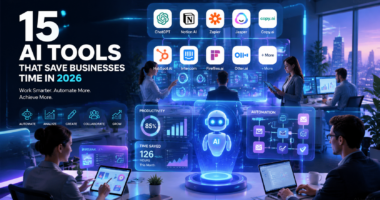

Time is one of the most valuable resources we have, yet it often feels like there are never enough hours in the day. Between managing emails, attending meetings, organizing projects, creating content, and completing repetitive administrative tasks, professionals can quickly become overwhelmed. Fortunately, modern Productivity & AI Tools are changing the way people work by automating routine activities, improving collaboration, and helping users accomplish more in less time.
Artificial intelligence has evolved into a practical workplace assistant that enhances efficiency rather than replacing human creativity. From AI writing assistants and project management platforms to workflow automation and intelligent scheduling, today’s technology enables businesses, freelancers, students, and remote workers to streamline their daily routines and focus on high-value tasks.
This comprehensive guide explores the most effective productivity and AI tools that save time, explains how they work, highlights their benefits, and shares practical strategies for choosing the right solutions for your personal and professional needs.
Why Productivity & AI Tools That Save Time Are Essential
Modern work environments demand speed, accuracy, and collaboration. Employees often spend hours each week performing repetitive tasks that add little strategic value.
AI-powered productivity software helps users:
- Automate repetitive work
- Reduce manual errors
- Improve communication
- Organize projects
- Enhance collaboration
- Increase efficiency
- Free up time for creative and strategic work
Instead of replacing workers, AI complements human skills by handling routine activities that consume valuable time.
The Evolution of Workplace Productivity
Traditional offices relied on paper files, spreadsheets, phone calls, and endless email chains. These methods often created bottlenecks, duplicate work, and communication delays.
Today’s digital workplace embraces:
- Cloud collaboration
- AI-powered assistants
- Automated workflows
- Real-time communication
- Smart scheduling
- Intelligent analytics
These innovations allow individuals and teams to work more efficiently from virtually anywhere.
Benefits of Using Productivity & AI Tools
Organizations and individuals adopting AI-powered solutions often experience measurable improvements in performance.
Key advantages include:
- Faster task completion
- Improved decision-making
- Better collaboration
- Reduced operational costs
- Higher work quality
- Increased employee satisfaction
- Greater flexibility for remote work
By minimizing repetitive work, employees gain more time to focus on innovation and problem-solving.
AI Writing Assistants Accelerate Content Creation
Writing emails, reports, proposals, and marketing materials consumes a significant portion of the average workday.
AI writing assistants help users:
- Draft emails quickly
- Generate blog outlines
- Improve grammar and spelling
- Rewrite complex text
- Summarize long documents
- Adjust writing tone
These tools reduce editing time while maintaining professional communication standards.
Project Management Platforms Keep Teams Organized
Managing multiple projects can become overwhelming without the right system.
AI-enhanced project management software offers:
- Task prioritization
- Deadline reminders
- Progress tracking
- Resource allocation
- Predictive scheduling
- Automated reporting
These features improve accountability and keep projects on schedule.
Smart Calendar Management Saves Hours Every Week
Scheduling meetings manually often leads to endless email exchanges.
AI-powered scheduling tools can:
- Find available meeting times
- Coordinate multiple calendars
- Handle time zones automatically
- Send reminders
- Reschedule conflicts
- Optimize daily schedules
Automated scheduling significantly reduces administrative work.
Workflow Automation Eliminates Repetitive Tasks
Many workplace activities follow predictable patterns.
Automation software can handle:
- Data entry
- File transfers
- Invoice processing
- Customer notifications
- Email routing
- Approval requests
Employees spend less time on routine tasks and more time delivering meaningful results.
Meeting Assistants Capture Every Important Detail
Taking notes during meetings can distract participants from meaningful discussions.
AI meeting assistants automatically:
- Record meetings
- Create transcripts
- Summarize conversations
- Identify action items
- Assign follow-up tasks
- Share meeting notes
These capabilities improve productivity while ensuring nothing important is overlooked.
Intelligent Email Management
Email overload remains one of the biggest productivity challenges.
AI email assistants help by:
- Prioritizing important messages
- Filtering spam
- Drafting responses
- Scheduling follow-ups
- Organizing inboxes
- Detecting urgent conversations
A cleaner inbox allows professionals to focus on high-priority work.
Document Management Made Smarter
Businesses generate thousands of documents every year.
AI-powered document systems provide:
- Intelligent search
- Automatic categorization
- Version control
- Duplicate detection
- Secure storage
- Instant retrieval
Finding important information becomes faster and more accurate.
Collaboration Tools Enhance Teamwork
Modern workplaces depend on seamless collaboration.
AI-powered collaboration platforms support:
- Instant messaging
- Video conferencing
- Shared workspaces
- File sharing
- Collaborative editing
- Smart conversation summaries
Remote and hybrid teams remain connected regardless of location.
AI Improves Customer Support Efficiency
Customer service teams often manage hundreds of inquiries daily.
AI tools help by:
- Routing tickets automatically
- Suggesting responses
- Analyzing customer sentiment
- Prioritizing urgent issues
- Supporting chatbots
- Updating knowledge bases
Support agents resolve issues faster while maintaining service quality.
Data Analytics Supports Faster Decisions
Organizations collect enormous amounts of operational data.
AI analytics platforms transform raw information into actionable insights by:
- Identifying trends
- Predicting outcomes
- Monitoring KPIs
- Detecting anomalies
- Creating visual dashboards
- Generating reports automatically
Leaders make informed decisions with greater confidence.
AI Supports Remote and Hybrid Work
Remote work requires reliable digital collaboration.
AI-powered workplace solutions enable:
- Virtual meetings
- Shared documentation
- Real-time communication
- Cloud storage
- Workflow visibility
- Performance monitoring
Teams stay productive regardless of physical location.
Choosing the Right Productivity & AI Tools That Save Time
Selecting software requires careful planning.
Evaluate solutions based on:
Ease of Use
Employees should learn the platform quickly.
Integration
The software should connect with existing business systems.
Security
Protecting sensitive business information is essential.
Scalability
Choose platforms that grow with your organization.
Pricing
Compare long-term value rather than focusing solely on initial cost.
AI Helps Reduce Workplace Burnout
Administrative work contributes significantly to employee stress.
AI reduces burnout by automating:
- Scheduling
- Documentation
- Data entry
- Reporting
- Task management
Employees spend more time solving problems and less time performing repetitive work.
Best Practices for Successful AI Adoption
Organizations should introduce AI strategically.
Recommended steps include:
- Identify repetitive tasks.
- Set clear productivity goals.
- Choose appropriate tools.
- Train employees thoroughly.
- Measure performance improvements.
- Continuously optimize workflows.
Gradual implementation increases adoption success.
Common Challenges During AI Implementation
Although AI offers tremendous benefits, businesses may face challenges such as:
- Employee resistance
- Learning curves
- Software integration issues
- Data privacy concerns
- Initial implementation costs
- Workflow adjustments
Effective planning minimizes these obstacles.
Future Trends in AI Productivity
Artificial intelligence continues evolving rapidly.
Future innovations may include:
- Autonomous project management
- Predictive workload balancing
- Intelligent digital coworkers
- Advanced voice assistants
- Personalized productivity coaching
- AI-generated strategic recommendations
Organizations embracing innovation will remain competitive.
Measuring Productivity Improvements
Businesses should monitor measurable outcomes after implementing AI.
Useful metrics include:
- Time saved
- Project completion rates
- Employee satisfaction
- Customer response times
- Operational costs
- Task automation percentages
Tracking results helps justify technology investments.
Creating an AI-Driven Workplace Culture
Technology alone cannot improve productivity.
Organizations should encourage:
- Continuous learning
- Innovation
- Knowledge sharing
- Collaboration
- Adaptability
- Open communication
A supportive culture maximizes AI’s effectiveness.
Industries That Benefit Most
Nearly every sector benefits from AI-powered productivity software.
Examples include:
- Healthcare
- Education
- Finance
- Marketing
- Manufacturing
- Legal services
- Retail
- Human resources
- Software development
- Consulting
Each industry uses AI differently while achieving similar efficiency gains.
What are Productivity & AI Tools?
Productivity & AI Tools are software applications that use artificial intelligence to automate repetitive tasks, improve collaboration, streamline workflows, and increase efficiency.
Can AI productivity tools save time?
Yes. By automating administrative work, scheduling, document management, reporting, and communication, AI significantly reduces the time spent on routine tasks.
Are these tools suitable for individuals?
Absolutely. Freelancers, students, entrepreneurs, and professionals can all benefit from AI-powered productivity solutions.
Do AI tools replace human workers?
No. AI is designed to support human work by handling repetitive tasks, allowing people to focus on creativity, strategy, and decision-making.
How do I choose the best productivity tool?
Consider ease of use, security, integration capabilities, scalability, pricing, and how well the platform fits your workflow.
Also read: Smart Productivity & AI Tools for Teams
The Final Bottom
Modern Productivity & AI Tools are transforming the way individuals and organizations manage their time. By automating repetitive tasks, improving collaboration, streamlining communication, and providing intelligent insights, these solutions empower users to accomplish more while reducing stress and administrative burdens.
Whether you are a freelancer managing multiple clients, a student balancing coursework, or a business leader overseeing complex projects, adopting the right AI-powered tools can significantly improve efficiency and productivity. As artificial intelligence continues to evolve, organizations and professionals who embrace these innovations will be better positioned to save time, increase output, and thrive in an increasingly digital workplace.