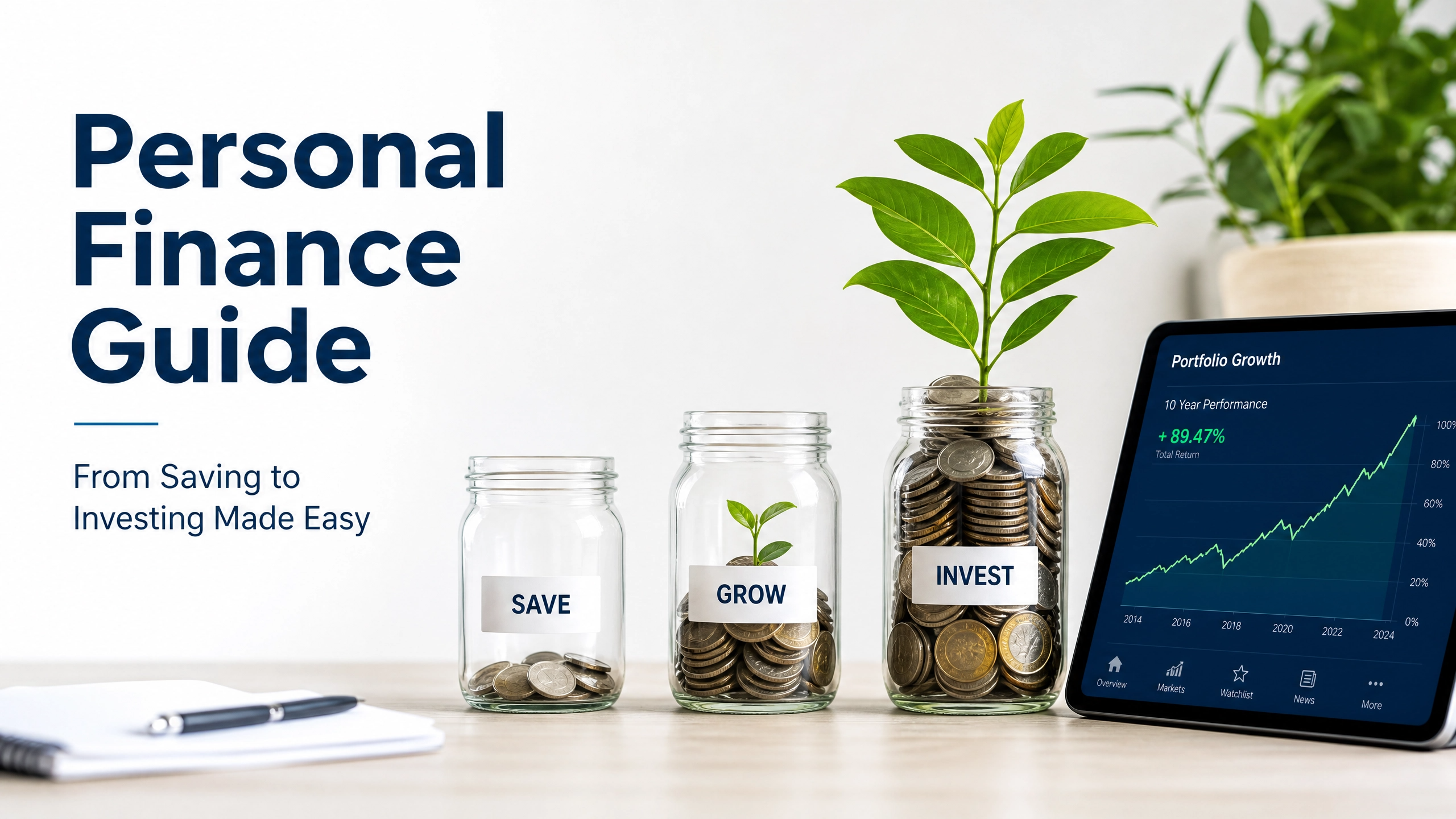

Managing money effectively is one of the most important life skills you can develop. Whether you’re just starting your financial journey or trying to improve your current situation, understanding how to move from saving to investing is the key to long-term financial success.
This personal finance guide will break everything down into simple steps so you can take control of your money, build savings, and confidently start investing for the future.
Why Personal Finance Matters
Personal finance is more than just budgeting—it’s about creating a system that supports your life goals.
Good financial habits help you:
- Avoid debt
- Build emergency savings
- Grow long-term wealth
- Achieve financial independence
- Reduce financial stress
Without a plan, money disappears quickly. With a plan, money starts working for you.
Step 1: Understand Your Financial Starting Point
Before you can improve your finances, you need clarity.
Start by identifying:
- Monthly income
- Fixed expenses (rent, bills, etc.)
- Variable expenses (food, shopping, entertainment)
- Existing debt
- Current savings
This snapshot helps you understand where your money is going.
Most people discover they spend more than they realize on non-essential items.
Step 2: Build a Simple Budget That Works
A budget is the foundation of financial control.
The easiest method is the 50/30/20 rule:
- 50% needs
- 30% wants
- 20% savings/investing
If you’re serious about wealth building, increase savings to 30% or more over time.
Budgeting is not restriction—it is direction for your money.
Step 3: Track Every Expense
You can’t improve what you don’t track.
Start recording:
- Daily purchases
- Online spending
- Subscriptions
- Small recurring costs
Even small leaks like coffee or delivery fees add up significantly over time.
Tracking helps you identify wasteful spending patterns quickly.
Step 4: Build an Emergency Fund First
Before investing, you need financial safety.
An emergency fund protects you from:
- Job loss
- Medical expenses
- Unexpected repairs
Start with:
- $500–$1,000 initial goal
Then build toward:
- 3–6 months of living expenses
This prevents you from going into debt during emergencies.
Step 5: Reduce Unnecessary Spending
Cutting expenses is one of the fastest ways to improve financial health.
Focus on:
- Subscriptions you don’t use
- Impulse shopping
- Frequent dining out
- Expensive habits
Redirect this money toward savings and investments.
Even small reductions can significantly increase your savings rate.
Step 6: Understand the Power of Saving
Saving money is your first step toward wealth building.
But saving alone is not enough—you need consistency.
Key saving principles:
- Pay yourself first
- Automate savings
- Save before spending
Once saving becomes automatic, financial stress decreases.
Step 7: Learn Basic Debt Management
Debt can either support or destroy your finances.
Good debt vs bad debt:
- Good debt: education, mortgage, business
- Bad debt: credit cards, high-interest loans
If you have debt:
- Pay more than minimum
- Focus on high-interest debt first
- Avoid new unnecessary debt
Reducing debt increases your ability to invest.
Step 8: Start Understanding Investing Early
Investing is how money grows over time.
Even small investments can grow significantly if started early.
Common beginner investments:
- Index funds
- ETFs
- Retirement accounts
- Low-risk diversified portfolios
Investing is not about timing the market—it’s about time in the market.
Step 9: Learn How Compound Growth Works
Compound interest allows your money to grow faster over time.
This is why starting early matters more than starting with large amounts.
Time is your biggest advantage in investing.
Step 10: Automate Your Financial System
Automation removes emotional decision-making.
Set up:
- Automatic savings transfers
- Monthly investment contributions
- Bill payments
This ensures consistency without relying on discipline alone.
Step 11: Diversify Your Income and Investments
Relying on one income source limits financial growth.
Consider:
- Side income
- Freelancing
- Dividend investments
- Real estate
- Digital income streams
Diversification reduces financial risk and increases stability.
Step 12: Focus on Long-Term Thinking
Short-term thinking leads to financial mistakes.
Instead:
- Think in years, not days
- Avoid emotional investing
- Stay consistent through market ups and downs
Wealth building is a long-term game.
Step 13: Increase Your Financial Knowledge
The more you learn, the better your decisions become.
Learn about:
- Budgeting strategies
- Investing basics
- Tax planning
- Financial planning tools
Education is one of the best investments you can make.
Step 14: Avoid Common Financial Mistakes
Avoid these common pitfalls:
- Spending more as income increases
- Ignoring budgeting
- Not investing early
- Relying on credit cards
- Emotional financial decisions
Fixing these habits alone can transform your financial future.
Step 15: Build Consistency Over Perfection
You don’t need perfect financial habits—you need consistent ones.
Focus on:
- Small improvements
- Monthly progress
- Long-term discipline
Even small steps compound into big financial results.
How Saving and Investing Work Together
Saving builds security. Investing builds wealth.
Together they create:
- Financial stability
- Wealth growth
- Long-term independence
You need both for a strong financial foundation.
When Should You Start Investing?
The best time to start investing is:
as early as possible
Even if you start small:
- $50/month is enough to begin
- Consistency matters more than amount
The earlier you start, the more you benefit from compounding.
Also Read: Personal Finance for Beginners: Simple Steps to Take Control of Your Money
Final Thoughts
This personal finance guide: from saving to investing made easy shows that financial success is not complicated.
It comes down to:
- Budgeting
- Saving consistently
- Avoiding debt
- Investing early
- Staying disciplined
You don’t need to be rich to start—you just need to start.
Every small financial decision you make today builds your future wealth.