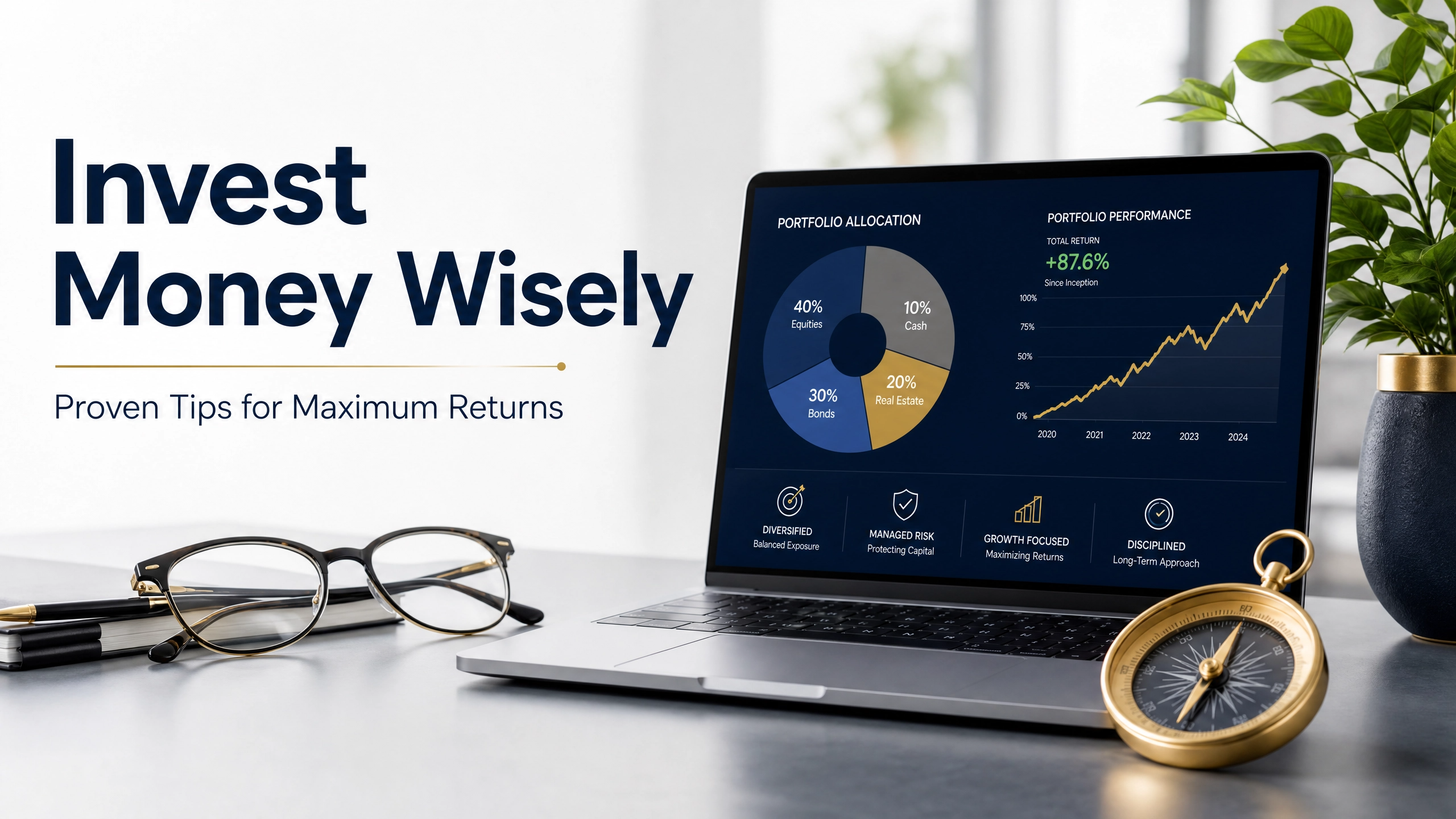

Investing money wisely is one of the most important financial skills you can develop. Whether you are just starting your financial journey or looking to improve your portfolio, understanding how to make informed investment decisions can significantly impact your long-term wealth.
In a world filled with countless investment options—from stocks and real estate to crypto and mutual funds—the real challenge is not access, but making the right choices. This guide will walk you through proven strategies to help you invest money wisely, minimize risk, and maximize returns over time.
Understanding What “Investing Wisely” Really Means
Investing wisely does not mean chasing the highest returns or taking the biggest risks. Instead, it focuses on balance, discipline, and long-term thinking.
Smart investing involves:
- Making informed decisions based on research
- Managing risk effectively
- Diversifying investments
- Staying consistent over time
- Avoiding emotional decision-making
The goal is simple: grow wealth steadily while protecting your capital.
1. Set Clear Financial Goals Before Investing
One of the biggest mistakes beginners make is investing without a clear purpose.
Before putting your money into any asset, ask:
- What am I investing for? (retirement, home, education, wealth building)
- What is my time horizon? (short-term or long-term)
- How much risk can I handle?
Why this matters:
Your goals determine your entire investment strategy. For example:
- Short-term goals → safer, low-risk investments
- Long-term goals → higher-growth assets like stocks or real estate
Without clear goals, investing becomes guesswork.
2. Build a Strong Emergency Fund First
Before investing aggressively, you need a financial safety net.
An emergency fund should cover:
- 3–6 months of living expenses
- Unexpected medical bills
- Job loss or income disruption
Why it’s important:
Without an emergency fund, you may be forced to sell investments at the wrong time during financial stress.
Think of it as your financial shock absorber.
3. Diversify Your Investment Portfolio
Diversification is one of the most powerful risk-management tools in investing.
It means spreading your money across different asset types so that no single investment can destroy your portfolio.
Common asset classes:
- Stocks
- Bonds
- Real estate
- Mutual funds or ETFs
- Commodities
Benefits of diversification:
- Reduces overall risk
- Stabilizes returns
- Protects against market volatility
- Improves long-term consistency
A well-diversified portfolio performs more steadily over time.
4. Focus on Long-Term Investing
Short-term trading may seem exciting, but long-term investing is where real wealth is built.
The stock market rewards patience through:
- Compound interest
- Market recovery over time
- Dividend reinvestment
- Long-term growth trends
Key mindset shift:
Instead of trying to “time the market,” focus on “time in the market.”
The longer you stay invested, the more your money compounds and grows.
5. Use Dollar-Cost Averaging (DCA)
Dollar-cost averaging is a simple but powerful investment strategy.
It involves investing a fixed amount regularly, regardless of market conditions.
Example:
- Invest $300 every month
- Buy more shares when prices are low
- Buy fewer shares when prices are high
Benefits:
- Reduces emotional investing
- Minimizes risk of bad timing
- Encourages discipline
- Works well for beginners
Over time, DCA smooths out market volatility and builds wealth consistently.
6. Invest in Index Funds and ETFs
Index funds and ETFs are among the safest and most effective long-term investment options.
They track entire markets or sectors rather than individual companies.
Advantages:
- Instant diversification
- Lower fees
- Steady long-term growth
- Less risk compared to individual stocks
For example, an S&P 500 index fund gives exposure to 500 major companies in one investment.
For most investors, index funds form the foundation of a strong portfolio.
7. Avoid Emotional Investing Decisions
Emotions can destroy even the best investment strategy.
Common emotional mistakes include:
- Panic selling during market drops
- Buying hype-driven assets
- Following social media trends
- Overtrading based on fear or greed
How to avoid emotional investing:
- Stick to a written investment plan
- Automate your investments
- Avoid checking portfolios daily
- Focus on long-term goals
Successful investors stay calm during market volatility.
8. Understand Risk vs Reward
Every investment carries risk—but not all risks are equal.
Types of risk:
- Market risk (overall economy)
- Company risk (individual stock performance)
- Inflation risk (loss of purchasing power)
- Liquidity risk (difficulty selling assets)
Rule of thumb:
Higher returns usually come with higher risk.
The key is not avoiding risk entirely, but managing it wisely through diversification and planning.
9. Invest in What You Understand
One of the most important investing principles is simple:
If you don’t understand it, don’t invest in it.
Many investors lose money by:
- Investing in complex financial products
- Following hype without research
- Buying assets they don’t understand
Smart approach:
- Learn before you invest
- Research companies or assets
- Understand how returns are generated
Knowledge reduces risk significantly.
10. Reinvest Your Earnings
Reinvesting is one of the most powerful wealth-building strategies.
Instead of spending profits, reinvest them into more assets.
Examples:
- Reinvest dividends into more stocks
- Reinvest rental income into new properties
- Compound interest from savings or bonds
Why it works:
Reinvestment creates a snowball effect through compounding, where your money generates more money over time.
11. Keep Fees and Costs Low
Investment fees may seem small, but they can significantly reduce long-term returns.
Common fees include:
- Fund management fees
- Trading commissions
- Account maintenance charges
Smart investing tip:
Choose low-cost index funds or ETFs whenever possible.
Even a 1% difference in fees can cost thousands over decades.
12. Stay Consistent with Your Investments
Consistency is more important than timing.
Even small, regular investments can grow into large sums over time.
Benefits of consistency:
- Builds discipline
- Reduces emotional decisions
- Maximizes compounding benefits
- Creates long-term wealth habits
The most successful investors invest regularly, regardless of market conditions.
13. Avoid Get-Rich-Quick Schemes
If something promises extremely high returns with little or no risk, it is likely a trap.
Warning signs:
- Guaranteed high returns
- Pressure to invest quickly
- Lack of transparency
- Unregulated platforms
Real investing is slow, steady, and based on strategy—not hype.
14. Regularly Review and Adjust Your Portfolio
Investing is not a “set and forget” activity.
You should review your portfolio at least once or twice a year.
What to check:
- Asset allocation balance
- Performance of investments
- Changes in financial goals
- Risk level adjustments
Rebalancing ensures your portfolio stays aligned with your goals.
15. Continuously Educate Yourself
Financial markets evolve constantly. Staying informed helps you make better decisions.
Ways to improve financial knowledge:
- Read investing books
- Follow credible financial news
- Learn from market cycles
- Study successful investors
The more you learn, the better your investment decisions become.
Final Thoughts
Learning how to invest money wisely is not about finding shortcuts or secret formulas. It is about building strong habits, staying disciplined, and making informed decisions over time.
Also Read: Top 10 Investment Ideas for Long-Term Financial Growth
To maximize returns while minimizing risk, focus on:
- Clear financial goals
- Diversification
- Long-term thinking
- Consistency
- Emotional discipline
- Continuous learning
Wealth is not built overnight—it is built step by step through smart, patient investing.
If you apply even a few of these proven tips, you will already be ahead of most investors and on a strong path toward long-term financial success.