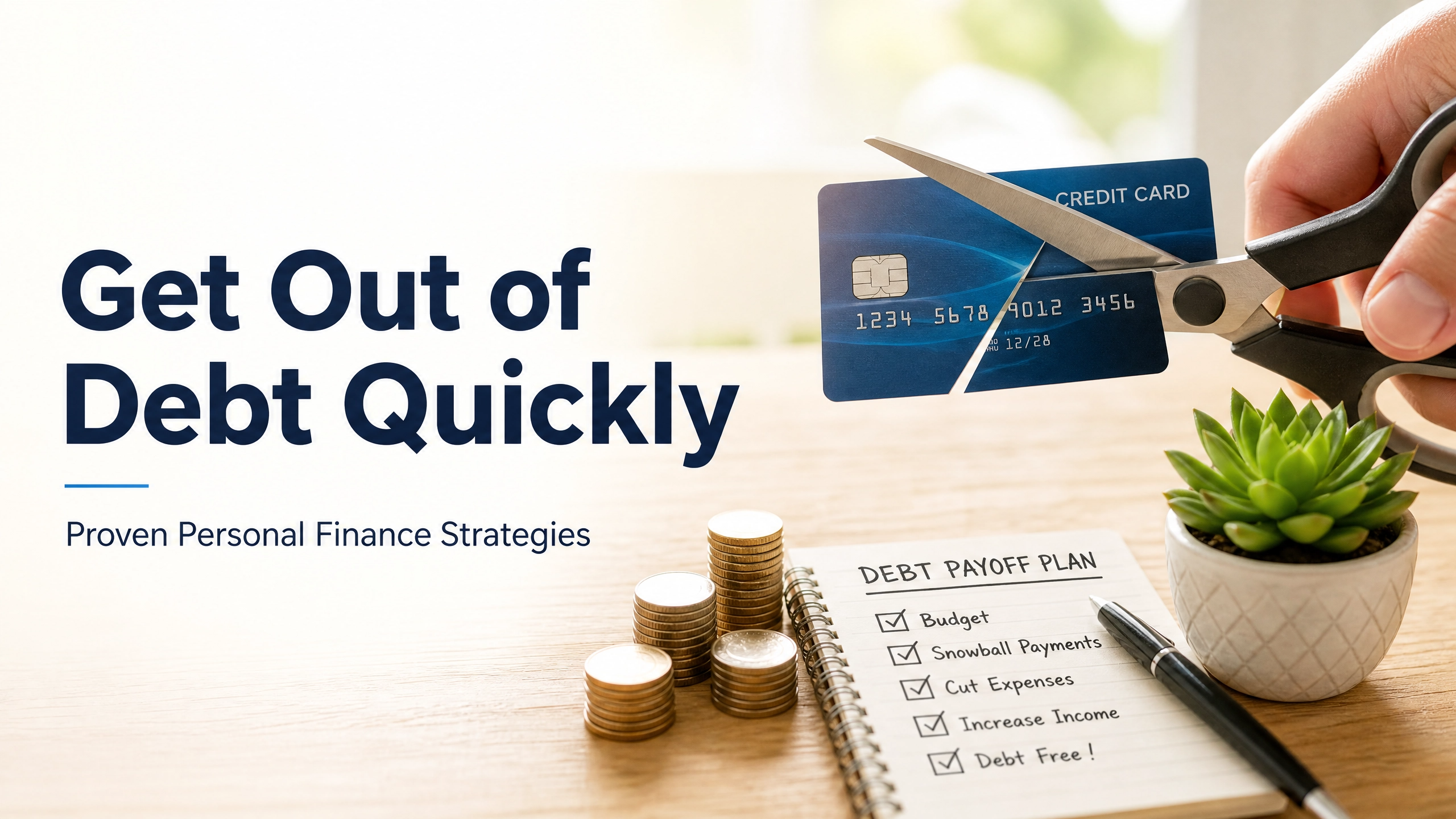

Debt can feel overwhelming, stressful, and never-ending. Whether it’s credit card debt, personal loans, student loans, or medical bills, carrying debt can make it difficult to build wealth or achieve financial freedom.
The good news is that getting out of debt quickly is possible with the right plan, discipline, and financial strategy.
In this guide, you’ll learn the best personal finance strategies to get out of debt quickly, reduce interest payments, and take control of your financial future.
Why Getting Out of Debt Quickly Matters
Debt is more than just a financial burden—it limits your future opportunities.
High-interest debt can:
- Reduce your savings potential
- Increase financial stress
- Delay investments
- Trap you in paycheck-to-paycheck living
The faster you eliminate debt, the faster you can start building wealth.
1. Understand Exactly How Much You Owe
You cannot solve what you cannot see.
Start by listing:
- Total debt amount
- Interest rates
- Monthly payments
- Due dates
This gives you a clear financial picture and helps you prioritize repayment.
Many people underestimate how much they owe until they organize everything.
2. Create a Strict Debt Payoff Budget
A budget is your most powerful debt elimination tool.
Adjust your budget to:
- Reduce non-essential spending
- Increase debt payments
- Allocate extra income toward repayment
Use the 50/30/20 rule temporarily shifted toward debt:
- 50% needs
- 10–20% wants
- 30–40% debt repayment
The more aggressive your budget, the faster you get out of debt.
3. Use the Debt Snowball Method
The debt snowball method focuses on motivation.
How it works:
- Pay off smallest debt first
- Move to next smallest
- Repeat until all debts are cleared
Even if interest is higher elsewhere, small wins build momentum.
This method works best for psychological motivation.
4. Use the Debt Avalanche Method
The debt avalanche method saves more money long-term.
How it works:
- Pay highest interest debt first
- Then move to lower interest debts
This method reduces total interest paid over time.
It is ideal for disciplined, math-focused individuals.
5. Negotiate Lower Interest Rates
Many people don’t realize they can negotiate debt terms.
Contact creditors and:
- Request lower interest rates
- Ask for hardship programs
- Explore refinancing options
Even a small reduction in interest can save thousands over time.
6. Increase Your Monthly Income
Paying debt faster requires either cutting expenses or increasing income—or both.
Ways to increase income:
- Freelancing
- Side jobs
- Selling products or services
- Part-time work
- Skill-based gigs
Extra income should go directly toward debt repayment.
7. Cut Unnecessary Expenses Immediately
Fast debt reduction requires financial discipline.
Cut:
- Subscriptions you don’t use
- Dining out frequently
- Impulse shopping
- Luxury purchases
Redirect saved money into debt payments.
Small cuts create big financial impact over time.
8. Use Windfalls Wisely
Unexpected money should accelerate debt repayment.
Examples:
- Tax refunds
- Bonuses
- Gifts
- Side hustle earnings
Instead of spending windfalls, apply them directly to debt.
This can significantly shorten repayment time.
9. Stop Accumulating New Debt
Paying off debt while adding new debt is counterproductive.
Avoid:
- Credit card overspending
- Buy-now-pay-later traps
- Unnecessary loans
If you continue borrowing, progress slows or stops completely.
10. Consolidate High-Interest Debt
Debt consolidation can simplify repayment.
Options include:
- Personal loans
- Balance transfer credit cards
- Debt consolidation programs
This can reduce interest and simplify multiple payments into one.
11. Build a Small Emergency Fund
It may seem counterintuitive, but it is essential.
Without an emergency fund, unexpected expenses lead back to debt.
Start with:
- $500 to $1,000 minimum buffer
This prevents setbacks during repayment.
12. Automate Debt Payments
Automation ensures consistency.
Set up:
- Automatic monthly payments
- Extra payments when possible
This removes emotional decision-making and builds discipline.
13. Track Progress Regularly
Tracking keeps motivation strong.
Monitor:
- Debt reduction progress
- Interest saved
- Remaining balances
Seeing progress encourages continued effort.
14. Adopt a Frugal Lifestyle Temporarily
Short-term sacrifices lead to long-term freedom.
Focus on:
- Minimal discretionary spending
- Simple living habits
- Prioritizing needs over wants
This phase is temporary but powerful.
15. Stay Consistent and Patient
Debt freedom doesn’t happen overnight.
Consistency is more important than intensity.
Even small monthly improvements compound into major results over time.
Debt Snowball vs Debt Avalanche
Both methods work, but choosing the right one depends on your personality:
- Snowball: Best for motivation and quick wins
- Avalanche: Best for saving money on interest
The key is choosing one method and sticking with it.
Common Mistakes to Avoid
Avoid these mistakes that slow debt repayment:
- Ignoring interest rates
- Making only minimum payments
- Using credit cards during repayment
- Not tracking spending
- Giving up too early
These habits delay financial freedom.
How Fast Can You Get Out of Debt?
Your timeline depends on:
- Income level
- Debt amount
- Monthly payment size
- Discipline
With strong effort, many people:
- Eliminate small debts in 3–6 months
- Clear larger debts in 1–3 years
Consistency is the key factor.
Also Read: Top 15 Personal Finance Habits of Financially Successful People
Final Thoughts
Getting out of debt quickly is not about extreme sacrifice—it’s about smart strategy and consistent action.
By using the best personal finance strategies to get out of debt quickly, you can:
- Reduce financial stress
- Improve cash flow
- Build long-term wealth
- Regain financial freedom
Start today, stay consistent, and every payment brings you closer to a debt-free life.